Saturday, January 9, 2021

NFL Playoff Fulcrums

 Chiefs film review, Part 2: The offensive line has come together at the  perfect time – The Athletic

The playoffs are here, and we’re down to fourteen teams competing for the Super Bowl title. We’ve seen all these teams play sixteen games, and we have a good idea of which teams are good at what. The Packers and Chiefs are driven by elite quarterbacks. The Steelers and Rams are carried by dominant defenses that support wildly inconsistent offenses.

There are a handful of teams whose strengths can carry them through to a championship, and every team has weaknesses that could sink them. The final outcomes will likely be decided by the other parts of these teams, the parts that could go either way. In some cases these are strengths throughout the season that could go away. In others, unreliable units that have the potential to get hot at the right time and elevate these teams to elite levels.

AFC

Kansas City Chiefs
Pass Protection

Patrick Mahomes is obviously a special type of superstar, and his performance in the playoffs a year ago will be difficult to ever forget. But quietly a big part of that was an offensive line that kept him pretty much spotless the entire postseason run. He faced virtually no pressure until the Super Bowl against San Francisco’s dominant and deep defensive line, and this made his big comebacks against Houston and Tennessee possible.

The offensive line has been a bigger issue this year for Kansas City. They’ve cycled through a bunch of combinations on the interior of the line, while their tackles have both been in and out of the lineups. It seems unlikely they will have Mitchell Schwartz available in the playoffs, an All Pro player now missing from the right side. If there’s any way to disrupt this Chiefs offense, it’s by getting pressure on Mahomes and forcing him to get rid of the ball when he doesn’t want to. Fortunately the only team in the AFC with a real dangerous pass rush is Pittsburgh, though this could present a problem if they make it to the Super Bowl.

Buffalo Bills

Non-Diggs Weapons
After years stuck as a second receiving option in Minnesota’s run-first system, Stefon Diggs broke out this year as the primary weapon in the Bills aerial attack. He led the NFL in both receptions and receiving yards, as he immediately became Josh Allen’s favorite target on every level of the field.
 

Allen got off to a hot start primarily by feeding Diggs, until defenses steadily adjusted to try to take him away. Allen’s performance dipped in the middle of the year, but over the final month both he and Diggs exploded through the finish line, helped by the additional weapons that emerged on Buffalo’s offense.

Cole Beasley has been a staple in the league as a third-down pest for almost a decade now, and he just wrapped up his best season, as he has mastered the art of finding holes over the middle of the field when his team needs him most. As John Brown has struggled with injuries, Gabriel Davis has stepped up as their primary deep threat. These other options have only opened things up more for Diggs, and they have the Bills offense clicking right now as well as any in the league. 

Pittsburgh Steelers

Ben Roethlisberger
There have been a lot of different issues that have plagued the Steelers offense over the second half of the season. Their offensive line has quietly become very mediocre over the past couple seasons. They have no explosiveness from their running backs. Multiple receivers have been best by drop issues. Defenses have adjusted to their quick passing game, tightening the field and giving them very little space to make plays underneath.
 

But all these issues eventually do come back to Roethlisberger. The line hasn’t been reliable in pass protection, but he’s exacerbated the issue by being so terrified of contact that he gets the ball out of his hand extremely quick even if there is no pressure to be found. This has limited their ability to attack the intermediate areas over the middle of the field, and has enabled defenses to suffocate the Pittsburgh offense.

Roethlisberger needs to start trusting the players around him and taking more risks. In the second half of their final meaningful game he seemed to realize this, and the offense opened up allowing them to come from behind to beat the Colts. The most obvious change was getting Chase Claypool more involved, but Roethlisberger himself was more aggressive and more accurate down the field. Can he sustain that for more than a half? At this point it seems unlikely, but we’ve seen this before when Peyton Manning looked done and then did enough to get a defense-first Broncos team to the title. 

Tennessee Titans

Defensive Disruption
Tennessee’s defense is bad. There really isn’t much more to say about it. They rank in the bottom five in defensive DVOA, alongside Detroit, Jacksonville, Houston, and Las Vegas. They are comfortably the worst defense to make this playoff field, and it’s quite possible they get run off the field right away with a defense that couldn’t stop someone moving at a slow walk.

Tennessee is in the playoffs because their offense is loaded. Loaded enough that they need just a little bit of life from the other side of the ball to give them a chance against just about any opponent. If that life is going to show up, it will come from the front four. Harold Landry took a step back with only 5.5 sacks this year, but he is still an explosive presence off the edge capable of racing around a pass blocker and striking the quarterback before he’s even completed his drop. And Jeffrey Simmons is an emerging star on the inside. When the Titans have found something resembling an effective defense, it has been because of Simmons utterly wrecking opposing offensive lines. They are going to need a lot of that to stay competitive in this postseason.

Baltimore Ravens

Down the Field Passing Attack
Baltimore’s offense has come alive over the past few weeks, and they are once again playing at the level that earned them the top seed in the AFC a season ago. The running game remains the heart and soul of this offense, but it’s been the development of their down the field passing attack that has really opened things up for them.
 

All season defenses tried to counter the Ravens by packing the box and closing off the middle of the field, and Lamar Jackson struggled when he was forced to throw into other areas. Marquise Brown has been a major disappointment in his second year, though lately he’s had a knack for finding the endzone, with touchdowns in five of Baltimore’s final six games. The real find though has been Miles Boykin. He’s still only getting about one catch a game, but these are typically big catches, with three of the last five going for touchdowns and two of these covering around 40 yards. The Ravens don’t need much from their passing game, just one or two explosive plays to keep defenses honest and soften things up for them to grind underneath.

Cleveland Browns

Keeping Baker Calm
The biggest change from last year to this year for the Browns was the improvement of their offensive line. The draft selection of Jedrick Wills locked down the left tackle spot for the long term, and Bill Calahan once again demonstrated why he’s one of the two best offensive line coaches in the world (Mike Munchak has been fighting him for that title for the past two decades). The line has paved easy lanes for their dominant running game, but it has been even more impactful protecting Baker Mayfield.

Three years into his career, Mayfield is a solid quarterback capable of some remarkable plays who still has absolutely no idea what an NFL pocket is. If he feels even a little pressure, he immediately tries to break away to the edge, often only running himself into even more trouble. Last year this led to erratic play and a ton of turnovers, but this year they’ve managed to keep him so clean that he never even has to think of pressure. When the Browns can do this, they have the weapons to be a dangerous passing attack. But it only takes a little pressure to throw this Mayfield completely off his game.

Indianapolis Colts

Running Game
Philip Rivers has bounced back after a couple rough seasons to end his time with the Chargers, but this passing game still doesn’t have the juice to light up opposing teams consistently through the air. Their defense is strong, but it may not be enough to keep them in games against the tougher teams in the AFC.
 

That’s where the running game comes in. The Colts have a better chance with a balanced attack, and with one that can keep the ball in their hands and shorten the game. For most of the season they didn’t have this running game, but Jonathan Taylor came alive down the stretch. He had 741 yards over his final six games, culminating in a 253 yard performance last week (against the Jaguars I know, but still). I’m still skeptical of how far a running game can actually carry a team in the postseason, but it’s a useful tool for an underdog, as Tennessee proved a year ago.


NFC

Green Bay Packers
Fast Start

Green Bay has settled into a steady rhythm as they’ve coasted through the mediocre teams on the schedule over the second half of the season. They explode out of the gate, put up a ton of points before halftime, and then go mostly silent on offense as they ride this early lead to an easy victory. There are a few possible explanations for this—they take their foot off the gas, Matt LaFleur is better at scripting the start of the game than adjusting as the game goes on—but so far it’s been an effective strategy.

The Packers are excellent front-runners, but this isn’t a team that is built to play from behind. The arrival of LaFleur has caused them to switch to an offense heavy on misdirection and play-action, which has revitalized Aaron Rodgers’s career while also leaving them vulnerable to the same flaws many teams that use this scheme have. When things are going well, they can keep opposing defenses on their heels and carve them up. When things aren’t going well, they struggle to beat a defense that knows to expect a pass-heavy attack.

Green Bay’s defense is also built to play with a lead. They are excellent against the pass, but they can be gashed on the ground when an opponent is able to stay committed to the run. This is what killed them in the playoffs against San Francisco last year, and it’s how they lost to the Vikings in Lambeau earlier this season. The Packers have to hope they can keep up their early-game success, because if they wind up in a competitive contest or fall behind, they are going to have to play a style they are not comfortable with. 

Seattle Seahawks

Pass Defense
The bigger questionmark for Seattle entering the postseason is an offense that has been lifeless down the stretch of the season. But, if I’m being totally honest, I’m not really sure what they have to do to fix this, aside from saying, “Russell Wilson needs to stop playing like shit.” So I’m going to address a different part of their team.
 

In the early and middle parts of the season Seattle’s pass defense was on a historically terrible pace. They couldn’t stop anyone or anything, and it only got worse when their secondary sustained multiple injuries. They’re healthier now, and they are playing much better, thanks in part to an improved pass rush. Carlos Dunlap has looked surprisingly spry since his midseason trade from Cincinnati, and Jamal Adams remains a unique contributor as a pass rushing safety. There are still holes blown wide open in their coverage units, and I worry what will happen when they face some of the elite quarterbacks in this playoff field. But they are at least getting some pressure now, which will keep them from surrendering fifteen yards every time the opposition drops back to pass.

New Orleans Saints

Pass Rush
The obvious answer here is Drew Brees, but I would pretty much just be copying a lot of what I said above about Roethlisberger. So instead I’m going to talk about the biggest change in this Saints team that occurred midway through the year, one that will be crucial if they are going to reverse their early season loss to Green Bay.
 

For the first few weeks, the Saints defense looked lifeless without any ability to get pressure on the quarterback. They have good players in their secondary, but not so good that they can hold up if the quarterback stands in the pocked for four or five seconds. As the season wore on, the defense came alive with a pass rush that stifled Tom Brady and held Patrick Mahomes in check, while carrying the team through their quarterback issues.

The big difference seems to have come with the return of Marcus Davenport in Week 5. While Davenport has only produced 1.5 sacks himself, his presence as a speed threat on the edge has opened up the rest of New Orleans’s pass rush game. The big question going forward will be leading sack artist Trey Hendrickson, who had 12.5 through the first fourteen weeks before a shoulder injury knocked him out. Without him this defense is vulnerable, but if the pass rush is at full strength they can cause problems for any offense. 

Washington Football Team

Secondary Receiving Options
There are a few reasons Washington was able to turn things on over the second half of the season. Alex Smith is getting most of the credit, but he was basically just as effective as the quarterbacks they had playing before. The defense coming together certainly played a part as well, but the biggest change as the season went along was the development of receiving threats outside of Terry McLaurin.
 

Early in the season McLaurin was all they had going. Over the first four weeks he accounted for 41% of the team’s receiving yards, an insanely high total for a single receiver. He was banged up a little down the stretch and only managed 16% of the team’s yards over the final four weeks, while the rest of the passing game stepped up.

McLaurin is still the best player on this offense, but it’s good to have some other options. Cam Sims and Steve Sims have alternated in the role as the second wide receiver, while both JD McKissic and Antonio Gibson have contributed out of the backfield. But the biggest find has been tight end Logan Thomas, who finished second on the team with 670 receiving yards and made huge play after huge play as Washington fought their way to the NFC East title. 

Tampa Bay Buccaneers

Coverage
Tampa Bay sort of flipped what sort of team they were halfway through the year. Early in the season their offense hit some bumps while Tom Brady and Rob Gronkowski got up to speed, and they won games mostly through a dominant defense. While their offense pulled together into an elite unit over the second half of the season, their defense lost the edge that made them look like a championship contender over the first two months.

Losing Vita Vea in the middle of their line was certainly a tough blow, but the bigger difference has been on the outside. Early in the season they excelled with a pair of lockdown cornerbacks in Carlton Davis and Jamel Dean, two players who both excelled by playing on a knife’s edge. As the year has gone on, Dean’s aggression has left him susceptible to big plays on double moves, while Davis’s physical style has drawn more penalties. If they can clean these issues up, they have the talent to lock down some of the dangerous passing attacks they will have to face to reach the Super Bowl.

Los Angeles Rams

The Brilliance of Sean McVay
Some of the shine has definitely worn off of McVay since Los Angeles’s run to the Super Bowl two years ago. But he remains a clever offensive mind, just one no longer playing with an absolutely stacked pool of talent. Fortunately, the Rams defense has ascended to an elite level this season, so they no longer need an offense lighting up the scoreboard to keep things competitive.
 

It’s still a little unclear what the Rams will do at quarterback, but either way they are left with someone far short of most of their playoff peers. Jared Goff has established what he is at this point—a solid option when everything is working smoothly around him, and a potential disaster when it isn’t. Fortunately, McVay is second probably only to Kyle Shanahan when it comes to putting his quarterback in position to succeed. He isn’t going to turn Goff into a superstar overnight, but if he can craft a few clever plays each game, the Rams can claw their way to a few ugly upsets.

Chicago Bears

Mitchell Trubisky on the Move
Trubisky is still a major liability for this team, but since his return to the starting role the Bears have found ways to use him far more effectively than in his prior time on the field. They are getting him outside the pocket a lot more on designed bootlegs to both the left and the right, which has a few different effects. It simplifies the reads by giving him only half the field to work in. It gets him away from an offensive line that has struggled all year. And it gives him the option to tuck the ball and run using athleticism that his backup Nick Foles simply doesn’t bring to the table.

The Bears face a steep climb in the playoffs, and if they are going to have any hope of pulling upsets they are going to need major contributions from Trubisky. He’s capable of spark plays with his arm, but they are likely going to need him to give them more on the ground. He’s averaged below 20 rushing yards per game in each of the past two years after contributing 30 per game in 2018, and this offense is going to need even more from him. Scrambles when the play breaks down, designed runs in timely situations, even some options with David Montgomery. Everything should be on the table for an offense desperately trying to conjure points.

Friday, January 1, 2021

Meaningless Thrills of Week 17

Justin Jefferson's breakout not enough, as Vikings falter at finish | Area  Pro Sports | siouxcityjournal.com

We’re once again to the final week of the NFL season, and as I do every year, it’s time to talk about the games that don’t matter. There are still 18 teams alive for 14 playoff spots, two divisions up for grabs, and a first-round bye in the NFC to be earned. But that still leaves almost half the league that has to finish their season with nothing on the line. Draft position means something I guess, but the two most valuable picks are locked in place, and there’s even a team like Houston that doesn’t care about draft position because they don’t own their first or second round picks.

But just because these games don’t matter doesn’t mean we shouldn’t enjoy them. After all, there are sixteen games this weekend and only thirteen games after that until the start of next year. Unfortunately, because of the extra playoff spots there are only five truly meaningless games this weekend. But that just means we can spend even more time focusing on what is special about them.


New York Jets at New England Patriots

The Red-Hot Jets
Two straight wins after an 0-13 start have the Jets in a very different position than we thought they’d be in the final week of the season. They are officially eliminated from the Trevor Lawrence sweepstakes (barring something stupid from the Jaguars on draft night, which we can’t reasonably rule out). And now they’re faced with questions in what was supposed to be a simple offseason. 

First things first, this had better be the last game coached by Adam Gase. There are rumors that team management has been impressed by the way the team came together and won games at the end of a miserable season, and that they are potentially giving credit to Gase for this performance. If they can win this final game against the Patriots, a three game winning streak may make them tempted to bring him back. They absolutely shouldn’t do that. Gase was a disaster in Miami, and he has been somehow even worse in New York. Whatever else they do with the team next year, they need to start fresh at the head coach position (and likely GM too, though it doesn’t seem like that will happen).

It hasn’t escaped notice that these two victories have come with Sam Darnold at quarterback. His numbers in these two games haven’t been great, but he made a handful of special plays that serve as a reminder that he is still extremely talented, and also that he is only 23 years old (younger than Joe Burrow and less than a year older than Kyle Trask, one of the quarterbacks they may look at in the draft). 

The thing is, even when you include these two games Darnold has been statistically the worst quarterback in the league during the 2020 season. More than that, the Jets have a decision to make this offseason with the fifth year option of his contract. If they pick it up, he’ll be under contract for the 2022 season at a guaranteed price of somewhere around $15-20 million (with the new CBA the option is now fully guaranteed, where before it was guaranteed for injuries only). At the level he’s currently played, this is basically a nonstarter. The Jets will not and should not pick up this option.

If the Jets don’t draft a new quarterback, they will likely play the 2021 season with their only option at quarterback a major questionmark entering the last year of his deal. This is basically what the Bears did at the start of this season. I suppose there is a possibility that he takes a major leap forward, but the two most likely scenarios are either that he’s a total disaster and leaves them in the same position next year that they are this year, or that he does some good and some bad and leaves them with a free agent they aren’t sure if they want to keep around, much like Mitchell Trubisky this year. 

The Jets missed out on Lawrence. But they still have the second pick in the draft, and that is an extremely valuable commodity. The Jets are hardly a model of organizational success, and yet the last time they picked this high was in 1996. The last two weeks are evidence of just how hard it is for a team to truly bottom out. Even if Darnold is a total catastrophe again next year, the Jets will still probably win four or five games and finish with a worse selection than they have this season.  This is a strong quarterback class even past the top option, and they need to take advantage of being in a position that 30 other teams in the league would kill for.


Atlanta Falcons @ Tampa Bay Buccaneers

Raheem Morris’s Job Interview
This game technically does have implications for Tampa Bay, as a win would lock up the fifth seed in the NFC, which would allow them to play the winner of the NFC East rather than one of the other divisions. But in the end they’re still going to go on the road for a playoff game a week from now, so I’m going to count this among the meaningless games this Sunday.

The Falcons fired Dan Quinn as their head coach following their fifth straight loss to open the season. They were basically eliminated from the playoffs at that point, and they handed the team over to defensive coordinator Morris to wind the clock on the rest of the year. The team responded by winning four of their next six and briefly entertaining hopes of getting back into the playoff race.

Four consecutive defeats later, the Falcons are headed for a top ten pick. It might be worth noting that three of these games came against playoff opponents, and all four were decided by a single score. But losing tough games late was what the Falcons did under Quinn, so it feels rather empty to keep giving them credit for moral victories. 

Still, there’s a feeling that Morris has a chance to keep this job next year. He interviewed for the position earlier this week, and this game is the second part of that interview. It’s impossible to say what’s going on in the heads of the people making these decisions, but a win certainly wouldn’t hurt his chances of getting the job.

Would it be a good hire? I have no idea. The track record of predicting a head coach’s success is little better than a random number generator at this point. Morris has been a head coach before, for three seasons with the Buccaneers from 2009-2011. These years did not go well, but there is a history of coaches failing in one situation and succeeding in another. He was only 32 years old the first time he was hired, and he’s had some time to mature and grow. It’s possible that this could work out, even if it isn’t the most exciting potential hire.


Las Vegas Raiders @ Denver Broncos

Light Up the Scoreboard
I can’t guarantee a shootout in this one. Relying on Drew Lock for anything is a bad idea. But his incompetence might be outmatched by that of Las Vegas’s defense, a truly special unit when it comes to watching points race up on the scoreboard.

There are a lot of problems with these teams, as evidenced by the fact that they are playing a meaningless game in Week 17. But skill position talent is not an issue. The Raiders have turned Nelson Agholor into a legitimate weapon, while Darren Waller has firmed up his position as the best tight end in the league whose last name doesn’t start with K. Josh Jacobs is fun enough as a running back, and while Henry Ruggs hasn’t lived up to expectations this year, his explosive speed means he’s always one play away from doing something spectacular.

Denver has loaded up on receiving talent as well, though it’s been obscured somewhat by their issues at quarterback. Noah Fant has had a solid second year as a tight end with excellent potential. Tim Patrick has emerged as a quality rotation wide receiver. And Jerry Jeudy is even more wildly unpredictable than expected, alternating breathtaking moves in space with stunning struggles catching the football (he had five drops just last weekend). 

I have no idea what to expect from these offenses in this game. We can hope for a wild shootout, as the Raiders defense gives up even more than they have already while their offense airs it out to keep up. Lock is an issue, but against weak defenses he’s shown the ability to put together surprisingly spectacular performances. If things go right, this game could turn into a race to 40 points.


Los Angeles Chargers at Kansas City Chiefs

Justin Herbert Lighting Fire to the Record Books
Justin Herbert has already set the record for most passing touchdowns by a rookie, and he has an outside shot on a few more records this weekend. He enters the weekend with 4034 passing yards on the season, good for fourth all-time. He will almost certainly get the 18 yards he needs to jump over Jameis Winston and Cam Newton for second. The bigger question will be whether he gets the 341 he needs to eclipse Andrew Luck’s 2012 campaign. And while that certainly seems like a lot, it’s a number he’s hit on two occasions this year and come close to on a couple other occasions.

The other thing to keep an eye on is the pass attempts number. Because despite not playing the first game of the season, Herbert is fifth in the league in passing attempts, and two of the players above him will not play this weekend (including the opponent in this game). With 564 pass attempts this year, he needs 12 more to pass Peyton Manning’s rookie year, 27 to pass Sam Bradford, 36 to pass Derek Carr, 44 to pass Wentz, and an unlikely 64 to pass Luck. Whatever the case, it’s clear that he has thrown the ball a lot this year. 

Herbert has certainly had a strong rookie year. But some of his position on the leaderboards comes from a year that is historically great for passing and a lot of pass attempts even for this era. When you look at his statistics on a per-pass basis, he’s about average for an NFL quarterback in 2020. And while that’s certainly good for a rookie quarterback, it raises some interesting questions in the Offensive Rookie of the Year race, which will likely come down to Herbert and another rookie looking to put up stats in a meaningless game.


Minnesota Vikings at Detroit Lions

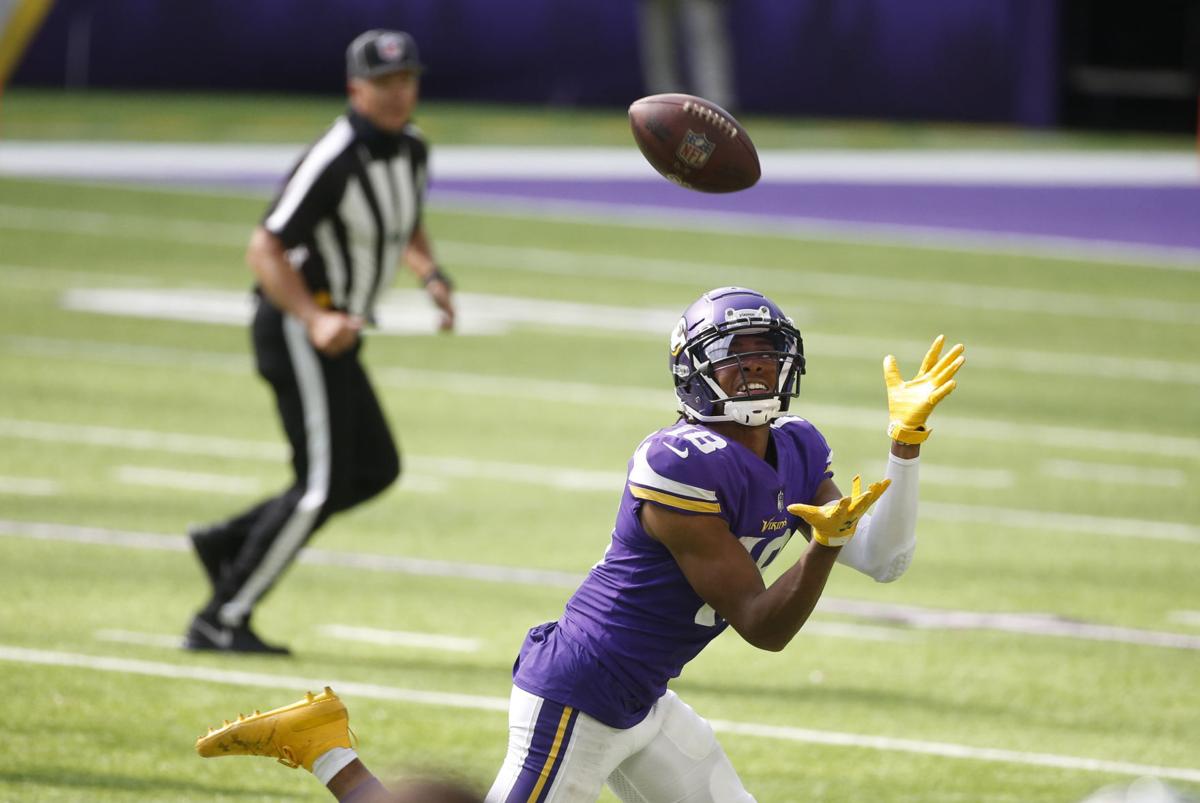
Justin Jefferson’s Closing Argument
The league MVP award pretty much always goes to a quarterback these days. With a word like “valuable” in the name, it’s hard to argue any other position can match the value of a top quarterback. It’s a little different for the Rookie of the Year award, where there is no similar concept of value and where the levels achieved by the best rookie quarterback and the best rookie at other positions are often very different relative to their peers.

Herbert has been an average quarterback in the league this year. Jefferson has been a Pro Bowl wide receiver. Balancing the two will be tricky when it comes to voting on this award, and I really have no idea which way it will go. 

Like Herbert, Jefferson has a chance to break some rookie yardage records on Sunday. With 1267 yards so far, he needs 39 to pass Odell Beckham’s rookie season, 47 to pass Randy Moss, and 111 to pass Anquan Boldin—a number he’s hit four times.

And unlike Herbert, this can’t be easily dismissed as a pure volume accumulation. The Vikings are one of the most run-heavy teams in the NFL this year, With 476 pass attempts on the season, they are unlikely to reach the 533 or 534 numbers from Moss’s or Boldin’s teams. They certainly aren’t going to get to the 607 from Beckham’s rookie year, though that’s a bit misleading as only 468 came in games that Beckham played (and one of these was thrown by Beckham himself).

Jefferson looks even better when you look at stats like yards per route run, where he is near the very top of the league. He’s putting together one of the best rookie seasons of all time, and if he can cap it off with another strong performance he can cement himself at the top of the historic leaderboard.

Tuesday, December 22, 2020

The Rebuilding Carousel

Deshaun Watson Defends Bill O'Brien After Loss vs. Chiefs: 'There's No  Doubt' | Bleacher Report | Latest News, Videos and Highlights

We’re nearing the end of another NFL regular season. For some teams this means getting ready for a playoff run. For others this means looking back on 2020, trying to figure out what went wrong, and then cobbling together a plan to cover up these issues in 2021. And, for a large number of teams, this could mean blowing things up and starting from scratch.

There are a lot of different philosophies for building an NFL team, but it wouldn’t be a dramatic oversimplification to say that it often comes down to the head coach and the quarterback. If you nail those two positions, you can be set for the next decade. If you screw them up, it often doesn’t matter what you do with the rest of the roster. You can load a team full of All Pro talent, but without a quality coach and quarterback you’re likely looking at just a brief playoff appearance.

This offseason feels like a particularly interesting one. First of all, this looks like a strong quarterback class in the draft, with potentially as many as six first round picks on the board. And second, there are some very interesting coaching vacancies that are bound to open up that will be extra attractive for top coaching candidates.

That last part is an interesting dynamic. It’s unclear how much control coaching candidates have over where they land, and how much is just a very limited selection of teams picking from a saturated market. But if a coaching candidate does have the flexibility to pass up lesser quality jobs, this year could be rough for several of those lower tier teams. Opportunities like the Texans, Jaguars, Chargers, and Jets are rare opportunities for a coach to sign on to teams with clear quarterback plans and either established talent in place or plenty of flexibility to build out their rosters.

This leaves a difficult puzzle for some of the teams potentially looking to make changes this offseason. On the one hand, this year may be as good as they can get for replacing their quarterback. On the other hand, it could be the worst year for trying to find a new coach. When you make these decisions, you need them to be in sync, otherwise you risk ending up like Washington, where Dwayne Haskins was ignored one year by a lame duck coach trying to win to keep his job and then shunted aside the next year by a coach with no investment in him.

Below I’ve gone through each team in position to change coaches this offseason. Some are set at quarterback. Others have open questions at that position. And others will almost certainly be searching this offseason. The decisions they make this offseason will shape the courses of these teams, and the entire league, for years to come.


Tier 1: On the Market

Three teams have already fired their head coach. One of the three is one of the attractive jobs I listed above, with a franchise quarterback locked down for years to come. The other two are in a very different position, and they will have tough choices to make this offseason.

Houston Texans

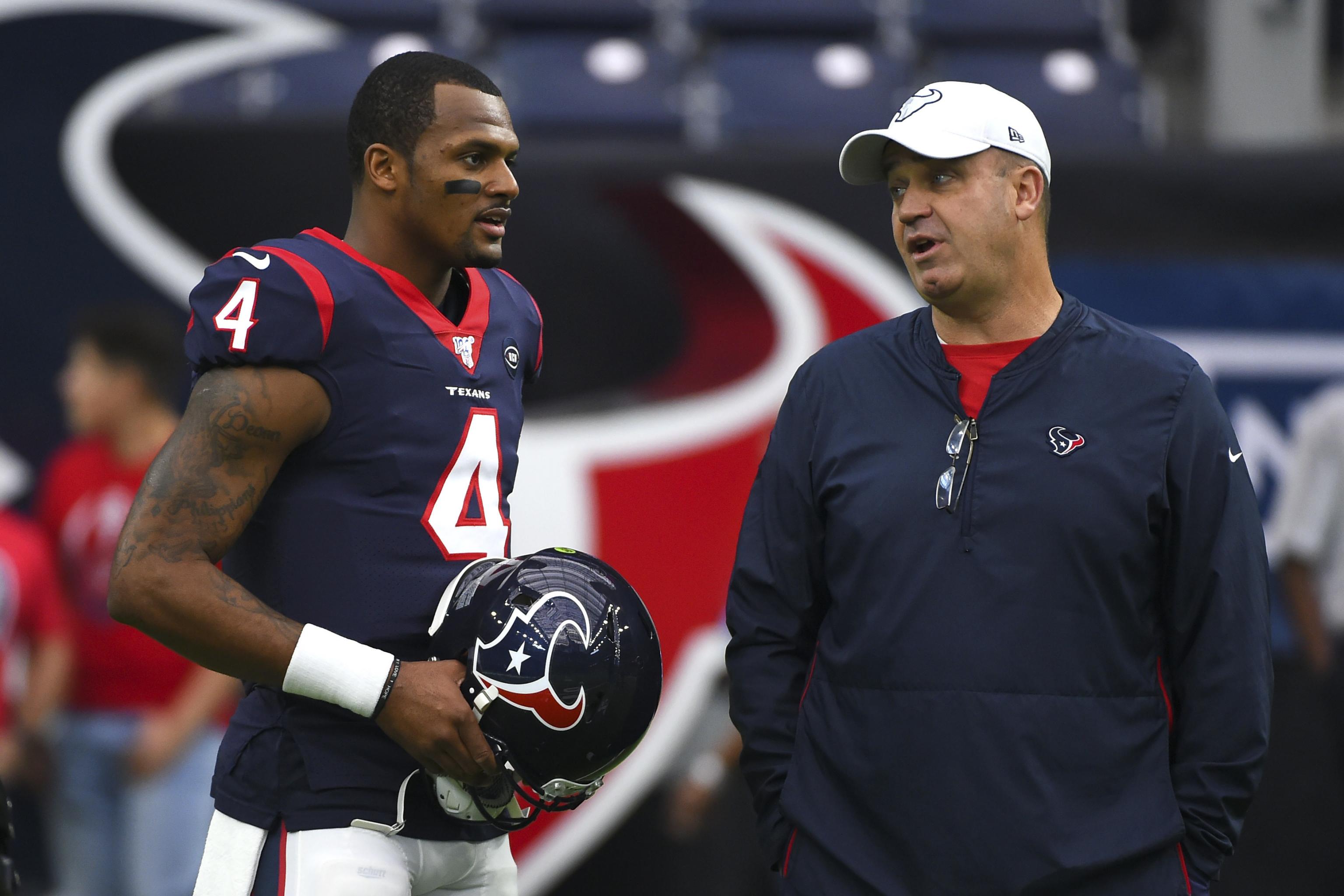
The Texans are in an odd position. On the one hand, they have the best quarterback situation of any team with a coach opening. The top candidates have to be salivating at the prospect of partnering with Deshaun Watson. On the other hand, their organization looks like it may be toxic from the top-down, and they will be without first or second round draft selections this year. I’m not really sure what the path forward is for trying to build a Super Bowl caliber supporting cast here. But with Watson locked up long-term, I think a quality coach should be able to make them competitive again in a couple of years.

Detroit Lions and Altanta Falcons

I’m lumping these two together because they’re basically in the same situation. Atlanta has a bit more talent overall to work with, but that talent hasn’t translated to wins for several years now. And both are stuck with aging quarterbacks on long-term contracts who have been trending down for a couple years. Matt Ryan is more concerning than Matthew Stafford, as he is three years older and has looked more lost in recent performances.

Both of these teams could go for a quarterback this year, but I’m not sure if that’s the best approach. The Lions might be able to trade Stafford for something this offseason, but the Falcons are likely stuck with Ryan for at least another year. And where they will wind up in the draft, they will likely have to settle for one of the lower-tier first round quarterbacks like Kyle Trask or Mac Jones. If they fall in love with one of these players, then it might be worth taking a shot. But they may be in a position where they should wait a year and try to bottom out in the hope of getting a top selection, like the Bengals did in their first year under Zac Taylor.


Tier 2: As Good as Open

These teams haven’t fired their coaches yet. But it would be a shock if they retained their current options. For the most part they’re set up well going forward, and should have no qualms about making the change.

Jacksonville Jaguars

Jacksonville is quietly in a pretty good position right now. With two more losses they will claim the prize in the Trevor Lawrence sweepstakes, giving them as sure a thing as you will get drafting a quarterback. This offense has the pieces of a solid line, a pair of talented young receivers in DJ Chark and Laviska Shenault, and plenty of draft capital and cap space to work with. I have some concerns about the overall organization, but the Jaguars still have the potential to take a major leap forward next year, and possibly push for the playoffs as early as 2022

New York Jets

The Jets are in the middle of one of the worst seasons in NFL history, but that likely won’t be enough to scare off potential coaches. They have a pair of impressive rookies on the offensive side in Mekhi Becton and Denzel Mims, and they have an emerging star on defense in Quinnen Williams. They have two first round picks this year, and while it has to hurt to miss out on Trevor Lawrence, they are still in position to get the best of the other quarterbacks in the class, likely Justin Fields. This seems like the perfect situation for Bills offensive coordinator Brian Daboll. After developing Josh Allen, he would be my choice to work with Fields, another special athlete who has some polishing to do to live up to his potential.

Los Angeles Chargers

Justin Herbert has hit some rough patches over the past few weeks, but he still has the look of a long-term solution at quarterback. Whoever signs on for the Chargers will have to be committed to him 100 percent, which likely means a system that plays to his strengths as a down the field passer rather than the quick-hitting scheme he used at Oregon. Sticking in-division with Eric Bienemy would be a good option. The Chargers are much more talented than their record indicates, and with some better coaching and better luck I expect them to be playoff contenders next year.


Tier 3: On the Fence

In a normal year it might make sense for these teams to throw their coaches overboard. But this is not a normal year, and they may want to consider holding out in the hopes that they will be in a better position a year from now, even if this means a lost 2021 season.

Chicago Bears and Denver Broncos

These teams are in a tough situation. They have no clear plan at quarterback beyond this year, but they likely won’t be in position to grab one of the top quarterback options. Neither of their coaches have been particularly impressive, but they haven’t exactly been terrible either. That said, I don’t think they’re around for the long haul. Even if they bring these coaches back, these teams will be bad next year, and they will likely make the coaching change then.

There are some tricky calculations involved with this. If they retain their coaches and draft a quarterback, they’re likely heading into 2022 with a new coach saddled with a quarterback he didn’t scout and select. If the quarterback has a strong rookie season like Herbert has, that would make them a more attractive destination for potential coaches. If not, they could wind up in a spinning-their-wheels scenario like Washington is now.

I think the best approach may actually be to totally toss the 2021 season on the scrap heap. Keep the coaches around, but don’t invest heavily in the quarterback position. Hope they do a better job bottoming out next year than they did this year, and see if they can grab someone at the top of the 2022 draft class. I think this makes more sense for Chicago than Denver, since they will have a weaker draft selection this year and have farther to go in terms of building an offense. But for both teams I think the smart approach would be to enter 2022 with a rookie coach and rookie quarterback joined at the hip.

Dallas Cowboys

The Cowboys have repeatedly said they aren’t going to jettison Mike McCarthy after one season, but it’s hard to know how much faith to put in their word. He certainly hasn’t been good this year, even before the injury to Dak Prescott. That injury has thrown a wrench into a team that was already in a messy situation at quarterback. They seemed reluctant to give a long-term deal to Prescott, even though he had earned it before the injury. Now they have an even tougher puzzle to work out. Should they try to use the injury to get a discount on the long-term contract? Should they franchise him again at an astronomical one-year price? Or should they take advantage of this down year to try to grab someone like Zach Wilson in the draft? I personally don’t think they can let someone proven like Prescott just walk out the door, but it’s hard not to be intrigued by the prospect of someone six years younger and $100 million cheaper.

Philadelphia Eagles

The quarterback situation in Philadelphia is a mess. They can’t get rid of Carson Wentz, and even after a promising first start I’m skeptical that Jalen Hurts will be any sort of answer. They have a ton of money invested in that position, and no real option to make any changes. If I was a coaching candidate with other options, I wouldn’t come anywhere near this mess. There are reports that the Eagles may be parting ways with Doug Pederson, but I think they should let him have another year to try to fix this, rather than going out onto the market in the hopes of finding someone willing to take on the project of revitalizing this toxic waste dump of a situation.


Tier 4: Wild Cards

I don’t think any of these teams will fire their coaches. I don’t think any of these teams should fire their coaches. But if things get out of hand, they could find themselves in a very bad position this offseason.

Cincinnati Bengals

I would be shocked if the Bengals fired Zac Taylor after only two seasons, especially since his second year was cut short by Joe Burrow’s injury. At the same time, I’m not sure Taylor has shown anything through his first two years to suggest he’s actually a good coach. I’m not sure he’s shown anything at all.

This is the problem with hiring a new coach too early in the rebuild process, and a reason I think several of the teams listed above should retain their coaches. When the Bengals hired Taylor before the 2019 season, they were a team clearly going nowhere. They weren’t an attractive job, and they ended up grabbing someone with no real qualifications besides two years working with Sean McVay. He entered a team on a downward slope, his first season was basically a total writeoff, and two years into his coaching tenure we still have no idea if he’s actually a good coach. Maybe the Bengals are trending up heading into 2021, but I can’t help but think they would have been better positioned if they had hired a new coach a year ago, when they had the top draft selection locked up and a clearer slate for potential coaches to work with.

Minnesota Vikings

There was a lot of talk early in the year about the Vikings potentially making a coaching change this offseason. A streak of wins that got them back into contention has mostly quieted that, even if they are unlikely to actually make the postseason. I don’t think they will change coach or quarterback, and I don’t think they should. Kirk Cousins has performed better as the season has gone along, and Mike Zimmer, for his flaws, is still an above average coach. I don’t think this combination will be competing for a Super Bowl anytime soon, but with the draft position they’ll be in, I don’t think this team is in position to blow things up either. This will likely mean another frustrating season or two for Vikings fans, but I don’t think there’s any real way around that.

Thursday, December 3, 2020

The Rocky Rookies

 NFL: Jeremy Chinn scores fumble-return TDs on back-to-back plays

We’ve reached the point in the NFL season when the year’s award races start to shape up. Every award is going to be fascinating to watch, as there isn’t a clear front-runner in any category (barring potentially Patrick Mahomes for MVP, who avoids being the clear favorite only because people are somehow tired of him winning after only one award).

One of the most exciting races is for Offensive Rookie of the Year. This category seems overwhelmed with quality choices. Justin Herbert and Joe Burrow were battling for the best rookie quarterback before Burrow’s season came to an unfortunate end a week ago. CeeDee Lamb and Tee Higgins have been consistent playmakers for their offense, and Chase Claypool is scoring touchdowns at an insane rate. And Justin Jefferson has been the best of all the rookie wide receivers, currently top ten in the league in receiving yards despite barely playing the first two weeks. If offensive linemen received any consideration for this award, both Tristan Wirfs and Jedrick Wills would have strong cases as cornerstone pieces on offensive lines that have made massive forward leaps for playoff teams.

We have a wealth of talented offensive rookies showing out early in their careers. On the defensive side of the ball we have, well, the opposite situation. This is the weakest defensive rookie class I can recall, and right now I’m having trouble picking a favorite for the award because, frankly, I don’t think any player has put together a season worthy of it.

Defensive Rookie of the Year is always a tricky award to predict, because there are no super clear patterns to look at. In the past ten years the award has been won by three edge rushers, three defensive tackles, two linebackers, and two cornerbacks. The only position that doesn’t seem to win is safety. A safety has only won the award twice in its 53 year history, and not since Mark Carrier in 1990.

Draft position seems to play some role. Four times in the past ten years it was won by the highest drafted defensive player—Ndamukong Suh, Von Miller, Joey Bosa, and Nick Bosa—and on four other occasions it went to a player taken in the top half of the first round. Two years ago it was won by a second round pick in Darius Leonard, and that’s about as much of an outlier as you will see.

The problem is, the first round of this year’s draft has not produced much on the defensive side of the ball. First of all, there were only 14 defensive players selected in this year’s first round, limiting the options somewhat. And only 5 of those players are currently on teams with a winning record which, though I don’t think it should, certainly matters.

The options are limited, and many of these players have struggled transitioning to the NFL, particularly the cornerbacks. Jeff Okudah, CJ Henderson, and Damon Arnette have varied between inconsistent and outright terrible. AJ Terrell, Jeff Gladney, and Noah Igbinoghene have been a little better, but that still just gets them to “below average”. Many of the receivers I listed above have thrived by feasting on cornerbacks who were playing at the same level as them just a year ago.

Some of the players have looked good but have struggled to find playing time. Javon Kinlaw is part of a deep defensive line rotation in San Francisco, and while his flashes have been good, he hasn’t had as many opportunities as he should. Isaiah Simmons had a few brutal plays early in the season, causing him to spend most of the season watching from the sideline until recently. Jordyn Brooks has played about a quarter of the possible snaps in Seattle, and K’Lavon Chaisson has played about half in Jacksonville, neither particularly effective when they have been out there.

Even in a normal year Defensive Rookie of the Year is a hard award to hand out. In football—in all sports, really—it’s a lot easier to find statistics to evaluate offensive performance than defensive. We can clearly see that Jefferson has been the best rookie wide receiver, since he has 250 more yards than any other, and yards are typically a fairly good indicator of how much value a receiver has provided. On the defensive side of the ball the main simple stats we look at are tackles, sacks, and interceptions, and even when someone produces big in one of these categories it often can be deceiving.

Not that any rookie is producing at a particularly high level in any of these stats. Typically the easiest statistic to impress with is sacks. Edge rushers are the highest paid player on a defense, and this is a position where true talents can make an immediate impact in the NFL. In the past we’ve seen players like Ndamukong Suh, Von Miller, and Joey Bosa earn this award by putting up double-digit sacks in their first year in the league.

It is highly unlikely anyone will reach that mark this year. Chase Young leads all rookies with 4.5 sacks through 11 games. The only other rookie with more than two is DJ Wonnum in Minnesota, whose sacks have largely come through scheme and hustle rather than consistent pass rushing skill.

Young is a different story. He got off to a hot start with 2.5 through his first two games, but has been hampered by injuries and bad luck as the season has worn on. Though the sacks haven’t been there, he has continued to generate pressure, and I think he’ll pick up a couple more sacks as the season winds down. It likely won’t be enough to get him to double digits, but if Washington remains in contention in the NFC East it could be enough to earn him the award.

Interceptions are another of the major defensive stats to look at, though they are often fickle and not particularly useful when it comes to judging overall ability. They’re also pretty much essential for a cornerback to win the award. Marcus Peters had eight his rookie year, while Marshon Lattimore had five.

No rookie has reached that level so far this year. Jordan Fuller leads all rookies with three, and he certainly deserves to be in the conversation for the award. The fact that two of these interceptions came on Monday Night Football against Tom Brady certainly helps, potentially making up for the fact that he would be pretty much unprecedented winning the award, as both a safety and a sixth round selection.

Only four other rookies have more than a single interception. One of these is Trevon Diggs, who got a lot of buzz earlier this year when he intercepted Carson Wentz twice on Sunday Night football, back before we realized just how broken Wentz is. It’s led to some people overvaluing Diggs. He’s made a handful of nice plays this year, and has outplayed most of the cornerbacks taken ahead of him in the draft. But on an average play he is a liability in coverage more often than he’s an asset. Along with Jaylon Johnson of the Bears, these two second-round cornerbacks have made just enough plays to show flashes of promise, while also being regularly targeted and burned by opposing teams to remind everyone they are still rookies.

This brings me to the third statistical category, which is tackles. First of all, I want to be clear: tackles are a pretty much meaningless stat. They exist without context, they are poorly tracked, and they often indicate a player who is specifically targeted by opposing offenses who are happy to let him make a tackle after a positive gain. But as much as I hate tackles as a stat, when looking at who could win this award it’s hard to ignore the value some people place on them.

The top rookies in tackles are a pair of similar players. Patrick Queen and Jeremy Chinn are phenomenal athletes who patrol the middle of the field, make plays from sideline to sideline, and do enough to convince casual watchers that they are budding stars on the defensive side. Both are among the favorites to take home this award. And both have been thoroughly mediocre most of the year.

I’ll start with Queen, since he’s the clearer case. In the middle of Baltimore’s defense, he’s been shielded by a strong defensive line and an elite secondary to allow him to make plays. But this also leaves him vulnerable to opposing offenses, who will gladly pick on him when they can engineer a matchup in their favor. He’s a special athlete, and he covers a lot of ground once he starts moving, but he doesn’t always move in the right direction. He has a tendency to skirt around blockers and make tackles five or six yards downfield rather than firing into a lane and stuffing the running back at the line. He’s been a liability in pass coverage as well, where many of his tackles have come wrapping up running backs and tight ends after allowing a reception.

To some extent, Chinn is a similar story. A safety/linebacker hybrid, he’s still figuring out a lot about playing in an NFL defense. Teams regularly attack him in coverage, and he spends a lot of time running around trying to figure out where the ball is going. When he does know what’s happening though, he fires downhill and makes some spectacular plays.

The playmaking aspect of this is intriguing. In a normal year I would tend to favor players who provide consistent value, but without such a player available, someone who makes splashes like Chinn is hard to look away from. He scored touchdowns on consecutive plays against Minnesota this past weekend, and he seems to be getting a better handle on things with each passing week. Carolina’s defense is still bad, but it has improved as the year has gone along thanks in large part to rookies like Chinn and defensive tackle Derrick Brown.

The ability to make splash plays gives Chinn a chance at this award, and he’s not the only one. The splashiest defender in this year’s draft was Isaiah Simmons, who went to the Cardinals with the eighth selection. He’s an elite athlete without a clear position, and for the first half of the season he was stuck on the sidelines as he tried to figure out how to fit into an NFL defense. But over the past few weeks he has found a role as an attacking linebacker, making regular plays both in coverage and rushing the passer. He’s barely played this year, and it’s hard to put him over players who have actually been contributors on the field in the majority of their teams’ games. But with a few more big plays as the Cardinals fight for a playoff spot, Simmons could make a late push for the award.

It’s hard not to pay attention to these big moments on the defensive side of the ball. Sacks and turnovers play a critical role in the outcomes of many games, and players who can stack up big numbers in these categories are certainly doing something right. It’s harder to identify players who excel simply by filling a role, which is why safeties so rarely win this award. The key to excelling at safety is versatility, and versatile players rarely put up big numbers in any one category, instead sprinkling contributions around in a way that provides much more value to their defenses.

There are two more names I want to bring up. A pair of second round safeties who have moved into starting roles, on excellent defenses for teams that are in the thick of the playoff race. Both Antoine Winfield for the Buccaneers and Julian Blackmon for the Colts arrived and instantly took crucial roles as one piece on talented veteran defenses. Neither has put up big stats, and both have been overshadowed at time by teammates. But neither of these defenses would be complete without these players on the back end.

If I had to pick someone today, I would probably choose between Young, Fuller, Chinn, and Blackmon, with a slight edge towards Blackmon. I may be putting too much weight on team success, but his effectiveness as both a run defender and a coverage man has played a crucial role in elevating a Colts defense that has them on the verge of the playoffs. I don’t think he will win the award—if it was handed out now, my money would be on Chinn, and by the end of the season I think it will be Young—but Blackmon is the most deserving in this year’s weak field.