Monday, January 7, 2019

Playoffs on the Line


Image result for quenton nelson texans
The first weekend of the NFL playoffs has run its course, and it was kind of a drag. We saw four low scoring and occasionally ugly contests, between teams that mostly looked surprised to discover they were still alive. The most points any team put up was Dallas with 24. We saw missed field goals, turnovers, exhausting replay reviews, and only very occasional touchdowns. And yet, through all of that, I had a fantastic time, thanks to fascinating clashes between the offensive and defensive fronts that went a long way to deciding these games.

In the past I’ve used this forum to mock the old saying that “the game is won or lost in the trenches”, but for this single weekend that turned out to be a pretty good summary of what happened. Of the four games all but one was claimed by the team with the superior line, and the battle in the trenches was one of the key deciding factors in each and every contest.

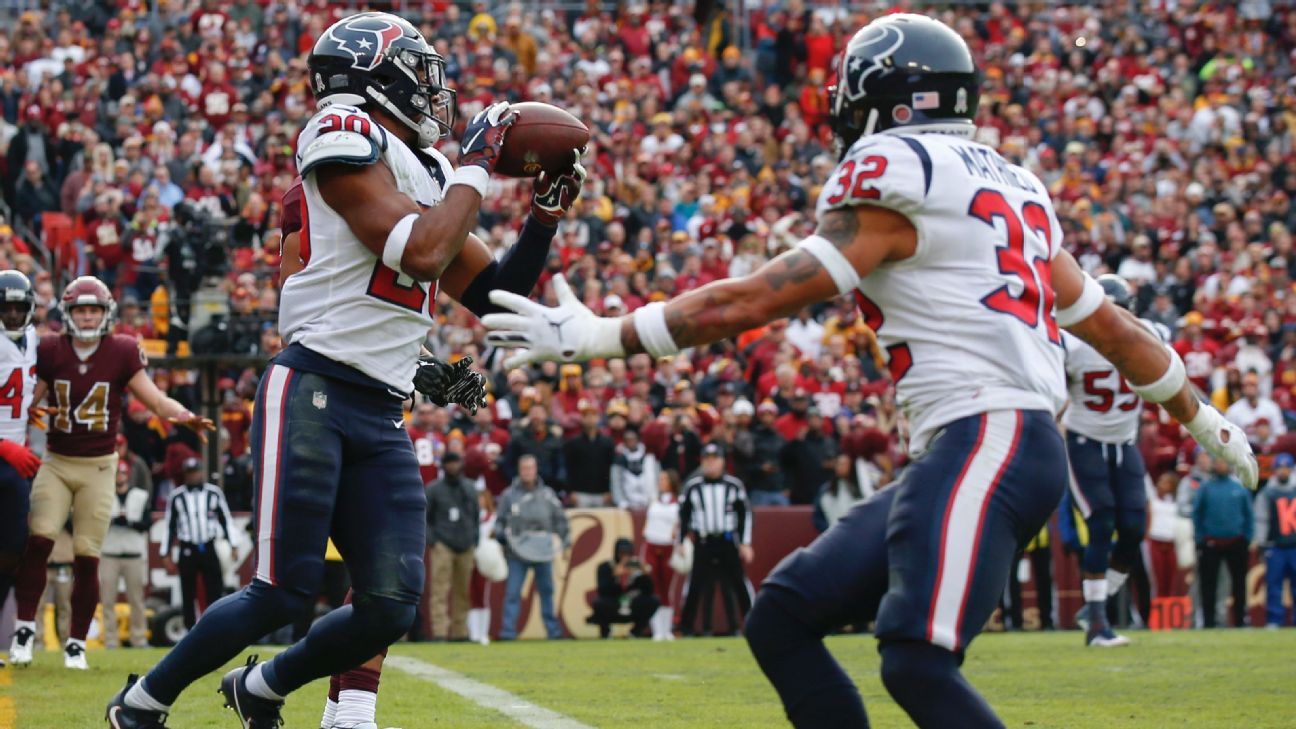
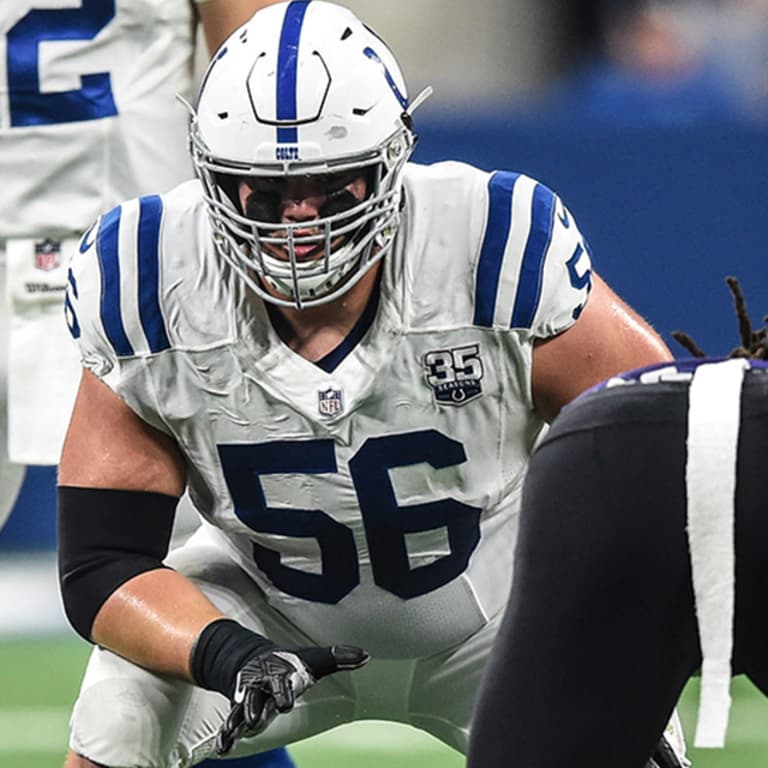
It started on Saturday afternoon with a matchup that looked particularly enticing, at least on one side of the ball. The Texans rolled into this game with a star studded defensive front, led by JJ Watt and bolstered by Jadeveon Clowney and Whitney Mercilus. Facing them was a rebuilt Colts offensive line that was arguably the best pass blocking unit in the league over the second half of the season, featuring All-Pro rookie Quenton Nelson.

This was every bit as exciting a matchup as we expected, even as it swung in two very different directions over the course of the game. From the beginning the Colts seemed to be in total control, grinding their way down the field repeatedly during the first half. They had five possessions during that half and scored touchdowns on three, only stymied on the other two deep in Houston territory by a deflected pass that turned into an interception and the first half running out. Watt and Clowney made their share of splash plays, but it wasn’t enough without being able to generate consistent pressure on Andrew Luck, and Indianapolis raced out to a 21-0 lead.

The second half was a different story. The Colts ended the day with the exact number of points they had at halftime, thanks to a sudden turn in the fortunes of the battle along the line. In the second half the Texans pass rush came alive, and though they didn’t manage to actually bring Luck down, they disrupted the timing of the offense and forced him into throwing a couple balls away. This defensive line kept Houston in a game that looked like it was heading for a blowout, and it was only the failures of their offense that kept things from ever becoming competitive.

The battle between the Colts offense and the Texans defense was a draw. The clash on the other side certainly was not. Indianapolis is far from prolific along their defensive line, but they were good enough to utterly humiliate the dreadful pass protection Houston has placed in front of Deshaun Watson, and to disrupt the Texans offense into only producing a single score.

Watson spent the entire afternoon running for his life, as he has pretty much the entire season. A soft schedule meant that most of the time it didn’t matter, and his ability to connect down the field with DeAndre Hopkins let them beat up on teams like the Giants, Jets, Bills, and Jaguars. But outside of Hopkins this offense really doesn’t have any reliable weapons, and after he suffered an injury in the first half that left him limited the rest of the game, there really wasn’t anything Houston could do. The Colts kept Watson contained in the backfield, and they forced him to make quick decisions against their zone defense, tricking him into a couple terrible throws and leaving him rattled so he missed some easy passes.

Image result for russell wilson cowboys

If there is anyone that can sympathize with the constant pressure Watson has faced this year, it’s Russell Wilson. For the past few seasons he has played behind one of the five worst lines in the league, regularly facing multiple defenders unblocked from the moment the ball arrives to him. After their offensive struggles left them on the outside looking in of the playoffs last year, the Seahawks finally decided they had seen enough and made major changes in the coaching staff on that side of the ball.

People rejoiced when they finally canned Tom Cable, and they were mostly okay with the decision to let go of Darrell Bevell. Those reactions became quite a bit less joyous when their solution at the position was Brian Schottenheimer, the face of nepotism in the league and a man who has failed at every one of the many opportunities that have been given to him. And yet, somehow, it seemed to work out for most of the year. They patched up their offensive line, and they found a way to keep Wilson upright using the most run heavy attack in the league.

Seattle’s loss to Dallas returned some sense of normalcy to the world, as we once again saw just how brutally incompetent Schottenheimer is. Dallas spent the game loaded up against the run, and the Seahawks could manage nothing on the ground. Even after Rashaad Penny broke a 28 yard run early in the second half, they managed just over 3 yards per carry as a team, utterly unable to stop Dallas’s linebackers from crashing down and ruining their plays.

And yet, even as things fell to pieces, they did not change their strategy. They had 24 rushing attempts for the game versus 27 passes, an insane ratio considering they were trailing at the end and had to go passes exclusively on their final drive. Over and over again they found themselves facing third and long, which was undoubtedly a factor in them converting only twice on thirteen third down attempts in the game.

Both Dallas and Indianapolis won because they dominated an inferior offensive line. The Colts erased Houston’s ability to pass by generating nonstop pressure on their quarterback, and the Cowboys forced the Seahawks into an awkward situation by taking away their rushing attack. Despite their better performance this year, Seattle still doesn’t trust their pass protection, and if they didn’t have the threat of run to slow down the pass rush, they didn’t want Wilson dropping back. It was only late when they began to trust their star quarterback that they finally got things clicking on offense, and by then it was too late to save their season.
Image result for derwin james ravens

Not trusting the offense was a trend that carried over into both of Sunday’s games. A pair of low scoring defensive slugfests emerged from teams that really had no interest in playing any other sort of game. Outside of the Chargers none of these four teams was particularly prolific on offense this year, but their unwillingness to at least trust their offenses to make plays led to some seriously negative consequences on Sunday.

The Ravens-Chargers matchup was one of the most fascinating chess matches I’ve see in a long time, and it all goes back to their regular season clash two weeks earlier. In that game the Ravens dominated the Chargers on both sides of the ball, harassing Philip Rivers with a nonstop frenzy of blitzes and controlling the game on the ground offensively. The Chargers entered this game knowing that they couldn’t trust their line to protect the quarterback, and that they needed to find some way on defense to keep from being overwhelmed by Baltimore’s ground attack.

The solution to the first problem was to not even try. The Chargers came out with the most conservative offensive gameplan I have ever seen from a team with a Hall of Fame quarterback. They committed to running the football, and they made no effort to the throw the ball down the field. Every pass came out of Rivers’s hand almost immediately, and more often than not their drives stalled as the Ravens rallied up and made the tackle short of the line to gain. A few times they tried to stretch the Ravens defense horizontally with receiver screens and swing routes, but they weren’t able to break the tackles necessary to turn these into big plays.

This strategy only worked because they trusted their defense to stifle Baltimore’s counterattack. Baltimore has a very strong offensive line, but it is limited in key ways. They aren’t the most athletic unit in the league, particularly on the right side where Marshal Yanda is well past his prime and Orlando Brown is less than a year removed from one of the most notoriously terrible performances in NFL Combine history. They found success down the stretch with a shotgun running attack powered by Lamar Jackson, but it was an attack that only had a few ways to succeed. Everything went to the right side, and it was all built around power and gap schemes that asked for limited lateral movement from their linemen.

Los Angeles’s solution to this was to stack the field with as much athleticism as they could muster and attack the gaps between the linemen. On 58 of their 59 defensive plays they had seven defensive backs on the field, more plays than they had such personnel the entire regular season. If these players had sat back and tried to play a solid gap scheme to bottle up the run, the Ravens would have had no trouble pushing them around. So instead they attacked, bringing a constant stream of run blitzes that shot into the backfield and disrupted Baltimore’s running game.

This exploited a couple key weaknesses in Baltimore’s attack. The first is that everything was designed out of shotgun, which slows the runner down receiving the handoff compared to a standard under center attack. This gave the Chargers more time to shoot the gaps on the backside and disrupt the play in the backfield. The normal counter to this strategy is to try more zone rushing, to exploit the cutback lanes left as the defenders race upfield. But Baltimore doesn’t have the personnel on the offensive line or at running back to make these schemes work, so their running game was bottled up most of the day.

Everything Baltimore does flows from their running game, and if it isn’t working then their passing game doesn’t work either. They found some success when they opened things up late in the game, but unlike Seattle I don’t think they would have done a lot better if they had tried throwing more earlier. Several of Jackson’s big plays were little more than wild swings of good fortune, as he scrambled behind the backfield then blindly chucked the ball up to a receiver who happened to come up with it. If they had tried this the entire game, it would have gone against them more than it did in the final couple minutes, setting the Chargers up for more easy points.

Image result for jason peters khalil mack

Both the Chargers and the Ravens limited their offenses for clear schematic reasons. It is a little less clear why Chicago and Philadelphia did the same, especially as the game wore on and they started to see what was and was not working. Obviously this game came down to a matter of a few inches, so it’s absurd to say that these teams were anything other than evenly matched, and evenly matched in a very similar way.

This game featured a collection of pass rushing talent that you would normally only see in a quarterback’s nightmares. On one side you have Khalil Mack and Akiem Hicks, while on the other you have Brandon Graham, Fletcher Cox, Chris Long, and Michael Bennett. But both sides also feature strong offensive lines, with Philadelphia having a clear edge thanks to All-Pro center Jason Kelce and arguably the best pair of tackles in the NFL.

Another similarity between the teams is a weakness on the back ends of their defenses. Chicago’s secondary performed very well this year, but on a pure talent level they are behind the rest of the defense. And with both Eddie Jackson and Bryce Callahan injured they are even weaker than normal, leaving big gaps all along the back end. The Eagles have been even more beat up than the Bears in the secondary over the course of the year, but they found some competence with a few young players down the stretch, who excelled due to their aggression challenging receivers at the point of the catch.

Aggression is fantastic for a defensive backfield, and it has worked wonders for both these defenses this year, thanks to pass rushes that force opposing quarterbacks to make quick and often incorrect decisions. But if a team can slow down their pass rush, aggression in the secondary often proves fatal. We saw plenty of that in this game, one of the most offensive 16-15 contests I can ever remember seeing.

The Eagles had open receivers running down the middle of the field most of the day, and they picked up big chunk plays thanks to penalties on open deep shots down the sidelines. During the second half the Bears exploited Avonte Maddox repeatedly with double moves over the top, a luxury they wouldn’t have had if they hadn’t been able to protect the quarterback.

Both the Eagles and the Bears were able to move the ball more or less whenever they wanted to. The strange thing was that most of the game passed without either team really seeming all that interested in attacking down the field. They were reasonably scared of the opposing pass rushes, but for most of the day these were held in check, with the offensive lines winning the most crucial battles. But both quarterbacks are prone to mistakes that can doom a team even with occasional pressure, as we saw in the first half with a pair of ugly interceptions by Nick Foles and several that should have been picked by Mitchell Trubisky.

If this game had opened up, it could very easily have been a 36-35 finish rather than 16-15. But either way the game was extremely evenly matched along both fronts, and in the end it came down to just a single kick. The Bears didn’t have the pass rush to beat Lane Johnson and Jason Peters on a consistent basis, and they couldn’t keep the Eagles out of the endzone at the end of the game. And yet the Bears had a chance because Trubisky was able to hit plays down the field in the final minute to get them into scoring range.

The rest of the playoffs will be just as fascinating along the lines. The only team left without an above average offensive line is the Chargers, and we haven’t even heard yet from dominant pass rushers like Aaron Donald, Chris Jones, Dee Ford, and Cam Jordan. Of course, there are plenty of elite skill position players left alive as well, and I expect things will open up more in the coming rounds. But for one week we had a bit of throwback football, where for once the games truly were won and lost in the trenches.

Saturday, January 5, 2019

2018 Playoff Preview: AFC


On Thursday I took you through the teams left alive in the NFC, taking a look at the strengths and weaknesses of each playoff representative. Today I will be doing the same for the AFC. We know these teams well by now, and we know where they excel and where they struggle. But often it is the other pieces that make the difference, the quieter strengths that allow them to differentiate from the other top teams they find themselves facing in the postseason.

Knasas City Chiefs
Image result for chris jones chiefs sack
Strongest Point – Vertical Attack
The Chiefs excel at pretty much everything on offense, but what really makes them terrifying is their ability to attack down the field. Patrick Mahomes has the best arm I have ever seen on a football field, and he can hit any spot from any platform at any moment. With the blazing fast Tyreek Hill on the outside and the almost unstoppable Travis Kelce working the middle of the field, he has plenty of weapons to justify taking several deep shots a game. This offense is hard enough to contain underneath, and even when a defense manages to do this, it only takes one play for the Chiefs to break things wide open.

Weak Spot – Run Defense
You can’t stop Kansas City’s offense, but you can keep them off the field. The most effective strategy so far this year for keeping their scoring in check is to shorten the game, to execute long, monotonous scoring drives by feeding the running game. The Ravens and the Chargers both held Kansas City under 30 points in the final month of the season thanks to their commitment to the running game, and if a team can stay within striking distance early on they have the ability to generate consistent movement on the ground. The Chiefs ranked dead last in defensive DVOA against the run, and it was only their explosive offense that prevented them from being gashed on the field every single week.

Secret Strength – Pass Rush
Chris Jones got most of the attention on this defensive front this season, and for good reason. He finished the year with 15.5 sacks, a career high bolstered by an NFL record 11 straight games with a sack down the stretch of the season. He bounces all along the defensive front and is capable of rushing from both the interior and the edge, winning through power, speed, and technique with enough frequency that you can’t really shut him down.

Jones is the best pass rusher the Chiefs have, but this is not a one dimensional attack. Justin Houston isn’t the dominant force he used to be, but he got healthier as the season went along, producing six sacks over his final four games. Dee Ford turned it on as well, collecting a career high 13 sacks as a speed rusher coming off the edge. Kansas City is going to get after the quarterback, and all they need to do is produce a couple negative plays from the opposing offense, trusting that a few ruined drives will be enough to let their explosive offense pull away.


New England Patriots
Image result for jc jackson
Strongest Point – Coaching
The Patriots have been great for nearly twenty years now, and while most of the credit goes reasonably to Tom Brady, we should acknowledge the role that adaptability plays in New England’s success. In the beginning they were a defense first team with a savvy quarterback who avoided big mistakes and came through in the clutch. Then they were an explosive passing attack, one of the first teams to widely adopt a spread offensive system. They’ve since evolved into a quick hitting passing game that utilizes a collection of versatile weapons to hit defenses in more ways than they can prepare for. The common thread? Bill Belichick, and his incredible ability to teach players whatever techniques and schemes he feels the need for on a given Sunday. The Patriots don’t have the best roster in the playoffs, but they have the best coach, and that might be enough to make up the difference.

Weak Spot – Wide Receiver
New England has a wide assortment of gadget weapons at their disposal. They have James White, an effective running back who is even better snagging balls out of the backfield. They have Cordarrelle Patterson, an electric playmaker with the ball in his hands who has bounced between receiver and running back this year. They have old stalwarts Julian Edelman and Rob Gronkowski, slowing down but primed for a playoff push. And outside of that? Not much, after the suspension of Josh Gordon. New England doesn’t have a single player it can line up on the outside and trust to beat man coverage, and that could be a disaster against some of the pass rushes they will face in the playoffs. Brady doesn’t move well under pressure, and his only real recourse is to get the ball immediately out of his hands, a serious challenge if he cannot count on his receivers to win off the snap of the ball.

Secret Strength – Secondary
New England seems to have a consistent pattern worked out. Every year they remake their defense into something new, letting crucial pieces walk away to be replaced by journeyman veterans and unproven youngsters. And every year their defense struggles out of the gate, only to pull it together as the season reaches its conclusion. This year it has happened in the back end, with a secondary that has emerged as a legitimate weapon headed into the postseason.

If you looked at a depth chart and saw names like Jason McCourtey and JC Jackson, I wouldn’t expect you to be particularly impressed. But over the past month they have performed at an insanely high level. They held the explosive Steelers passing attack to 17 points, and then they shut down a red hot Sam Darnold in the final week of the season. Obviously the stars of Devin McCourtey and Stephon Gilmore continue to shine bright, but the depth of this secondary is what has really made it come alive down the home stretch, and it leaves them in a great position to feel confident as they face down some of the best offenses in the league.


Houston Texans
Image result for justin reid interception
Strongest Point – Defensive Line
It really isn’t fair that this team has both JJ Watt and Jadeveon Clowney. After a couple years lost to injury, Watt has returned to his former level of dominance, adding another All-Pro season to what was already a Hall of Fame career. And in the time he was away, Clowney developed into one of the best all around edge defenders in the league. He isn’t a pure pass rusher like some other players, and his mediocre sack totals reflect that. But he is a nightmare against the run, an effective player dropping into coverage, and an athlete that causes problems with whoever tries to block him.

Weak Spot – Offensive Line
The Texans certainly don’t regret the decision to move up and select Deshaun Watson, but I have a feeling he personally isn’t thrilled by what they had to give up to get him. The extra first round pick they spent to move up (as well as the second rounder they sacrificed to get rid of Brock Osweiler) meant there was essentially nothing they could do to improve their offensive line this year, and it absolutely showed. Watson spent most of the season running for his life, and if there is any way to contain this explosive passing attack, it is by going after the line.

Secret Strength – Playmaking Middle of the Defense
It’s difficult to find a real secret strength on this team. The Texans are not balanced, and they are not subtle. They are going to get after you on defense with Watt and Clowney, and they are going to attack you on offense with Watson and DeAndre Hopkins. But they have put together a quietly strong middle of the defense, through some excellent middle round draft picks and a key free agent signing.

The best known player in this group is Tyrann Mathieu, the former Cardinal who has been up and down in a career riddled with injuries. He has fit in perfectly with this Texans defense as a playmaking safety and slot defender who is free to play aggressively and attack constantly downhill. He is helped on the back end by rookie Justin Reid, a rangy deep cover safety with excellent ball skills who produced three interceptions this year. And at linebacker they have a solid duo that complements each other perfectly, with the hard hitting style of Benardrick McKinney stuffing up the middle to give freedom to the rangy cover specialist Zach Cunningham.


Baltimore Ravens
Image result for lamar jackson read option
Strongest Point – Pass Defense
After a couple years of fits and starts, everything seemed to come together for Baltimore on defense. Marlon Humphrey is an emerging star, and within a year or two you will begin to hear his name regularly mentioned among the top cornerbacks in the league. Jimmy Smith is still excellent whenever he can find his way onto the field, and Brandon Carr provides a solid veteran presence in the slot. While the Ravens lack any single elite pass rusher, the strength on the back end allows them to play aggressive with their defensive front, attacking with a wide variety of pressure packages that usually manage to confuse the offense and corral the quarterback.

Weak Spot – Pass Offense
Baltimore has still been functional in the passing game since moving to Lamar Jackson as the starting quarterback, but that is entirely due to their running game. Defenses are selling out 100% to try to contain Jackson as a runner, which opens opportunities down the field in a play action passing attack. This works as long as teams still feel the run is a threat, but if the Ravens fall behind in a game they are going to be in trouble. So far Jackson hasn’t proven he can just drop back and throw against an NFL defense, and if he finds himself in a situation where he can’t lean on the running game as a crutch, he has shown no indication that he can lead a functional NFL passing offense.

Secret Strength – Unique Running Game
Baltimore’s offense is the ultimate realization of the Wildcat package that was introduced to the NFL ten years ago. They have taken everything teams have learned over the past decade and integrated it into a shotgun running attack, led by the best athlete to ever serve in this role. Jackson hasn’t been as aggressive a runner in the NFL as he was in college, but he is still first and foremost a run threat on every play. His ability to stretch the field as a passer better than the normal running backs and wide receivers inserted into a Wildcat package certainly opens things up, but in the end it is his rushing ability that terrifies defenses.

This scheme is a nightmare to defend. Basic rushing defense relies on discipline and a numbers game, bringing more defenders into the picture than an offense could conceivably block. On a normal running play the quarterback does nothing more than hand off the ball, eliminating a potential blocker and giving the defense a numerical advantage. Forcing defenses to account for Jackson essentially uses him as a blocker, changing the calculations of the scheme a defense needs to run. It is a difficult situation, and one that is unfamiliar to most NFL defenses, giving the Ravens the edge as they force the opposing team to adjust to this unique and frustrating scheme.


Los Angeles Chargers
Image result for desmond king
Strongest Point – Passing Attack
We all knew (or at least had faith) that it would happen eventually, and this year it finally clicked for the Chargers. Keenan Allen stayed healthy. Mike Williams contributed. Antonio Gates continued to plod his way down the field. And Philip Rivers stood in the center of it all, distributing the ball with the same mad fury as ever, now with talent on the receiving end to complement his skills. And if they do in fact get Hunter Henry back in the postseason, their passing attack will only pick up, perhaps even enough to match some of the high flying offenses above them.

Weak Spot – Offensive Line
It’s hard to find a real weakness on this team. They are probably the most complete roster from top to bottom of any of the playoff teams, the only one to rank in the top quartile in both offensive and defensive DVOA. Their linebackers aren’t great, and they are a bit banged up at running back. But their biggest woes remain on the offensive line. They’ve invested high draft picks repeatedly in recent years, and they haven’t paid off, with Dan Feeney struggling and Forrest Lamp for some reason not seeing the field. Most of the time Rivers is quick enough getting the ball out to mitigate the damage, but against aggressive pass rushes this line is vulnerable to total collapses, like the one that cost them the game against the Ravens three weeks ago.

Secret Strength - Secondary
The Chargers boast the most fascinating array of playmakers in their secondary that I can ever recall a single team assembling. There’s Casey Hayward, a veteran cornerback who has been putting in consistently strong work for years now without receiving much acclaim. There’s All-Pro nickel back Desmond King, a quick twitch athlete who swallows receivers in the slot. And then there’s Derwin James, a playmaker who really can't be defined by any single position.

This secondary has so much talent and so much versatility, and there really isn’t anything they can’t do. Their players can rotate to any position they need in coverage, bouncing between the slot and the boundary depending on what matchups they like. They are aggressive against the run, and they match up well against tight ends and backs out of the backfield. They are a dream scenario for a defensive coordinator, and a nightmare for opposing quarterbacks.


Indianapolis Colts
Image result for quenton nelson
Strongest Point – Andrew Luck
He was gone for a long time, but it was well worth the wait. After taking a couple weeks to knock the rust off, Luck has returned to his position as one of the premier quarterbacks in the league, and he carried the Colts on his back to this playoff spot. He’s changed his style since his return from injury, taking a lot less contact and fewer chances down the field. It has made him less exciting, but it has probably made him a more consistent quarterback, capable of sustained excellence rather than the sporadic bursts of brilliance we saw during his early years in the league.

Weak Spot – Offensive Weapons
It’s a good thing they have Luck, because otherwise I’m not sure how this offense would score points. TY Hilton is still a quality receiver, but he has his limitations, and Indianapolis still hasn’t found anyone to fill the gaps in their offense. They turned Eric Ebron into a viable red zone threat because they needed someone down there, and their backfield is a rotation of late round running backs who are only still around because their rookie contracts are cheap. Realistically the Colts should be looking ahead to the offseason, when they have the cap room to actually do some work on fixing this roster. But for now Luck is enough to elevate the mediocre talent they have, and it might be enough to get them a victory or two before they inevitably flame out.

Secret Strength – Offensive Line
I could just as easily write about the success they’ve found this year on defense, but in truth I’m not really sure what’s working on that side of the ball, outside of rookie linebacker Darius Leonard. It could all easily fall apart in any given week, so I’ll stick to a strength I’m confident is going to hang around. After years of investing high draft picks into the offensive line, things are finally paying off for Indianapolis, giving Luck for the first time in his career some semblance of real protection in front of him.

I feel great for Luck, but I might feel even better for left tackle Anthony Castonzo. After years toiling as the one functional piece on an otherwise abysmal unit, he finally has some real talent alongside him. That talent is most obvious in the form of All-Pro rookie Quenton Nelson, but he is far from alone among the young talent on this line. Former first round pick Ryan Kelly is living up to his billing, and second round rookie Braden Smith is a revelation as well. This line is still very young, but they are already one of the best in the league, and this playoff game will give them a chance to show off what they’re capable of for the entire league to see.