Thursday, October 11, 2018

Saving the Season


Week 5 of the NFL season was one that jumped out immediately from the day the schedule for the season was first released. The prime time games didn’t look all that interesting (and they lived down to these expectations), but the afternoon slot featured games matching up four of the final eight teams from the playoffs a year ago.

The early slot featured two teams coming off disappointing losses in the Divisional Round, the Falcons and the Steelers both entering the year with hopes of bouncing back for a deeper playoff run. And later in the afternoon the Vikings faced the Eagles in a rematch of last year’s NFC Championship Game.

These were expected to be two clashes of top teams looking to establish themselves as the elites of the league, yet all four entered the weekend in much more dire straits than expected. Through the first four weeks these teams combined for a total of five victories, and this past weekend’s games were more about survival than anyone could have expected.

These teams were expected to be among the best in the league, but so far they have seen nothing but struggles. The Steelers and the Vikings pulled out much needed victories, while the Falcons and the Eagles are left still looking for answers. It is still a long and uphill road for all of these teams, and the issues that popped up early in the season are not going away.

Atlanta Falcons
Image result for keanu neal injury
What has gone wrong
The first thing people pointed to this season was the red zone offense. It was clear low hanging fruit, after the team’s season ended last year with four straight failed attempts to get into the endzone from inside the ten yardline, problems which recurred in their opening night matchup against Philadelphia. Julio Jones remains puzzlingly incapable of scoring a touchdown, and after Week 1 people were hounding for offensive coordinator Steve Sarkisian’s job.

It is actually remarkable how quickly things have turned around on that front. Following their failures against Philadelphia, the Falcons scored touchdowns on 11 consecutive red zone trips, finding life in rookie receiver Calvin Ridley who has six touchdowns through the first five games of his career. This has coincided with an overall explosion on the offensive side of the ball, averaging 35 points in the three games leading up to the Week 5 matchup against the Steelers.

The offense isn’t the problem. After some struggles in the opener, Matt Ryan has played at an extremely high level. They have a deep receiving corps, and they’ve mostly chugged along even while missing a couple games from Devonta Freeman. The problems have come on the defensive side of the ball, which was supposed to be their salvation coming into the year.

It’s easy to see why everyone was excited about Atlanta’s defense, and it’s just as easy to see why it has struggled. The excitement was based off the young talent in place, boasting emerging stars at every level. Grady Jarrett, Deion Jones, Keanu Neal, and Takk McKinley are all above average players 25 years of age or younger, and they all had the potential to take a step forward this year. Instead they have all missed time with injury, with Jones and Neal done for the rest of the year.

The defensive woes reared their ugly head once again against the Steelers. After allowing 43 and 37 points to the Saints and the Bengals, they gave up 41 in their loss to Pittsburgh. Right now the defense that was supposed to take a leap forward is playing worse than any other unit in the NFL.

Can it be fixed?
There is no magic cure for injuries. McKinley and Jarrett may make their way back into the lineup, and if they can generate more consistent pressure up front that will certainly make life easier on the back end. But the versatility of Jones and Neal that made them so effective shutting down tight ends and running backs a year ago is nowhere else to be found on this roster, and this isn’t going to change until they return next year.

There are other players they could look to for help on the defensive side of the ball. Vic Beasley led the league in sacks just two years ago, but he has all but disappeared since then, seemingly losing his ability to explode upfield and turn the corner overnight. Desmond Trufant hasn’t been the same since returning from the shoulder injury that ended his 2016 season, but he should still be playing better than he is, at the very least a capable cornerback rather than a liability on the outside.

The Falcons need their defense to step up, because they’ve already shown that their offense isn’t enough to compensate for it. This offense played as well as humanly possible against both the Bengals and the Saints, and it still wasn’t enough to pull out closely contested shootouts in the end. It isn’t surprising that they had a letdown against Pittsburgh, just as it’s not surprising that their defense was as miserable as ever turning an off day from their offense into a blowout loss.

The Falcons are playing with no margin for error. Already sitting at 1-4, they face a very steep road to the playoffs. And unless their defense makes a significant jump forward, they are going to need their offense to be nothing short of perfect just to keep competitive in most games. As talented as this team is (and they were my preseason Super Bowl pick), I think the hole they’ve dug themselves may be too deep to climb out of.


Pittsburgh Steelers
Image result for tj watt
What has gone wrong
The problems in Pittsburgh aren’t as clear as they are in Atlanta, since they may be more varied. As poorly as their defense has performed during the early part of the season, they have faced their share of struggles on offense as well. The easiest place to point the finger has been to the absence of Le’Veon Bell, but James Conner has been more than satisfactory filling his shoes. A couple games they’ve fallen behind and ended up abandoning the run, but when they’ve stuck to their guns they have had no trouble moving the ball on the ground.

The offensive woes center almost entirely around Ben Roethlisberger. The enigmatic veteran continues to get more inconsistent as he ages, and over the first four weeks he faced a bizarre struggle to connect with his future Hall of Fame wide receiver Antonio Brown. Brown is right up there with Michael Thomas and Adam Thielen for the most targeted receivers in the league, but he lags far behind in reception and yard productivity, largely because the passes thrown his way have so consistently sailed out of his reach.

With Bell out it has become too easy for both the Steelers and opposing defenses to lock in on Brown, and their offense has stagnated at times trying to get him involved. JuJu Smith-Schuster has been one of the best receivers in the league this year, but they often ignore him for the sake of keeping Brown happy. This has led to too many failed drives while Roethlisberger struggles to get in sync with his most dangerous target, and it’s caused problems keeping up while their defense struggles to hold the opposition in check.

Pittsburgh’s defense hasn’t been as bad as Atlanta’s, but through the first four weeks it was its own kind of disaster. They were forced to constantly shuffle their cornerbacks as no one they plugged in on the right side could even come close to keeping up with the receivers they faced. Their pass rush wasn’t winning enough to bother quarterbacks, and they did virtually nothing this offseason to fill the massive hole in the middle of the field carved by Ryan Shazier’s injury.

Over the past few years they have tried to revitalize their defense with highly drafted athletes they hoped they could mold into top tier players, and so far they have failed to develop any of their acquisitions. Bud Dupree can flash when he’s unblocked, but given any sort of traffic he wilts into a nonfactor. Artie Burns has no idea what he’s doing at cornerback, and while Stephon Tuitt and TJ Watt are good players, neither has grown on the star potential their flashes have hinted at.

Can it be fixed?
I’m understandably a bit more bullish on the Steelers than on the Falcons, considering how the game went on Sunday. While Atlanta doubled down on everything that is going wrong, the Steelers managed to patch up their biggest holes on the way to a decisive victory they hope can turn their season around.

The issues with Brown reared their head in the first half, but something seemed to click after halftime, as Roethlisberger came out slinging the ball and hit Brown for two big touchdowns. This had the feeling of an inevitability, as Brown continued to generate consistent separation even through his dip in productivity. He’s one of the five best receivers ever to play the game, and he was always going to be fine.

The signs of life shown by Pittsburgh’s defense are even more intriguing. This was the Steelers defense we got used to seeing over the past few years, the one that managed to win games while still not making a lot of sense. None of their pass rushers are particularly great on their own, but as a unit they manage to generate consistent pressure on the quarterback, sacking Matt Ryan six times almost all of which came at crucial moments. Their defense produced turnovers, their young players looked competent for a change, and they held one of the most dangerous offenses in the league to 17 points.

I’ve been skeptical of Pittsburgh’s defense a lot over the past few years. So much of their success doesn’t seem to make sense, relying on splash plays that they seem to pull out of nowhere on a consistent basis. This isn’t a team that is going to lock down the opposition, but as long as their offense is producing they can do just enough to ruin a few drives each game. I’m still worried about everything I highlighted in the section above, but Sunday’s game gives reason for cautious optimism.


Philadelphia Eagles
Image result for jalen mills
What has gone wrong
It was always expected prior to the season that the Eagles might get off to a rocky start. Despite Nick Foles playing impressively over the final two games of their playoff run, this team was always going to rely on the healthy return of Carson Wentz, and before the start of the season no one knew how long he would be out. He ended up missing two games, which the Eagles passed with an acceptable record of 1-1.

The bigger surprise is what has happened since. The Eagles pulled out a narrow victory in his first start against the Colts, a team they shouldn’t have even noticed as they ran over. They then blew a big lead to fall in overtime against the Titans, leaving the defending champions at .500 as they prepared to host the team they throttled to win the conference a year ago.

Wentz has been a bit shaky as he has returned from his injury, but he is far from the biggest problem with this offense. The only major departures they suffered during the offseason were LeGarrette Blount and Torrey Smith, the former ideally absorbed by their depth at running back and the latter replaced by some combination of Mike Wallace and Mack Hollins.

Injuries have ruined both of these plans. Darren Sproles has missed time, forcing them to lean more heavily on Corey Clement and Jay Ajayi, the latter of which was just recently placed on injured reserve. And while both Wallace and Hollins are fairly far down their receiver depth chart, in their absences the Eagles have lacked a deep threat in their passing game that Nelson Agholor, Alshon Jeffery, and Zach Ertz cannot provide. As Wentz has returned from injury, he has found himself in a much more challenging situation than he faced a year ago, helming an offense that was averaging just over 20 points a game heading into their matchup against the Vikings.

Can it be fixed?
The injuries that have plagued this offense are an issue, but the game against Minnesota revealed much more serious problems with parts of the Eagles roster that were considered strengths heading into the season. The Eagles won the Super Bowl with a lot of help from their skill position players a year ago, but at their core they were always a team built around a strong defense and a solid offensive line.

Those two strengths have betrayed them so far this season. Their best players on the line are their two tackles, and while Jason Peters has been as solid as ever returning from injury on the left side, Lane Johnson has had uncharacteristic struggles protecting the right. But he is still a far sight better than the interior of this offensive line, which was torn to pieces by Linval Joseph and Sheldon Richardson on Sunday. This is a tough matchup for any line to face, but they didn’t stand a chance on nearly every play, blown backwards to ruin running plays and collapsing the pocket in Wentz’s face so he could never become comfortable.

Similar struggles have popped up on the defensive side of the ball. Philadelphia’s defensive line is still fantastic, only bolstered by the additions of Michael Bennett and Josh Sweat. The weakness of this defense was always the back end, but a season ago they thrived due to excellent performances from less heralded players like Jalen Mills and Rodney McLeod. McLeod is now out for the remainder of the season, and Mills has been an unmitigated disaster (made only worse by facing the top receiving duo in the league this past weekend.)

These issues are definitely a reason for concern, but they also offer some hope as well. Because we have seen these parts of Philadelphia’s team function at a high level, and if they can figure out a way to return to last season’s form they can compete with the top teams in the NFC. The injuries aren’t magically going to go away, but this was a team a year ago defined by their ability to bounce back from what appeared to be devastating absences. There’s a long road ahead for Philadelphia, but fortunately it looks like an easy one, and even if they struggle to something like a 9-7 record that will likely be enough to win the NFC East and give them a chance to figure things out again when the playoffs roll around.


Minnesota Vikings
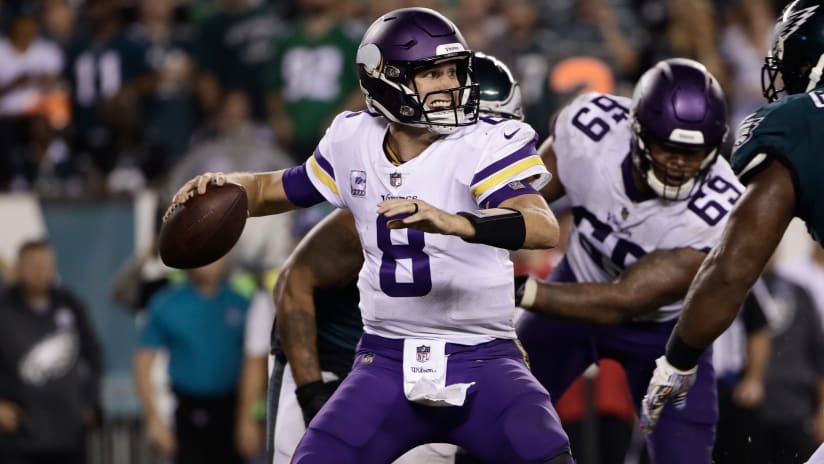
Image result for kirk cousins eagles vikings
What has gone wrong
If there was one thing that worried me most heading into the season, it was the change the Vikings made at quarterback. I was not a fan of Kirk Cousins prior to this year, and I was disappointed when he ended up signing with my favorite team. I expected him to struggle behind an offensive line worse than anything he ever had in Washington, and to have issues developing chemistry with Minnesota’s elite receivers on the outside.

And yet through the early part of the season, the passing attack has been the one part of this Vikings team that has actually been working. Cousins has been spectacular, fighting through heavy pressure to launch the ball to all corners of the field in the most explosive passing game Minnesota has seen since Daunte Culpepper (a brief dalliance with Brett Favre aside). This passing game blitzed through San Francisco, brought them back to tie the Packers, and gave them a chance to keep up with a Rams team firing on all cylinders.

The rest of the roster, well, that’s a different story. The running game was a questionmark heading into the season, and behind a reshuffled and banged up offensive line it isn’t surprising that they haven’t captured the success they had prior to Dalvin Cook’s injury a year ago. What wasn’t expected was the total ineptitude they’ve shown in that part of the game, to the point that they have essentially abandoned the run altogether. No team passed the ball more frequently over the first four weeks than the Vikings, and given their lack of success on the ground they were probably still a little too balanced.

More perplexing are the issues they have had on defense. After fielding the best defense in the league a year ago, the Vikings have been exposed repeatedly by offenses as wide on the spectrum as the Bills to the Rams. Receivers are regularly left totally uncovered down the field, they are missing tackles that were sure a season ago, and they haven’t generated as much pressure as they have in the past. After blowing a second half lead to the Saints and then getting overrun by the Eagles in the playoffs last year, this was a serious trend through the first four weeks, and more than a few were beginning to wonder if opposing offenses had figured out a key to attack Mike Zimmer’s once vaunted scheme.

Can it be fixed?
Minnesota’s win over Philadelphia was certainly a positive sign on every account. Statistically they didn’t have a great day running the football, but they carved enough sporadic lanes to at least give them some threat on the ground. They did this despite losing starting left tackle Riley Reiff in the first half, getting quality contributions from rookie Brian O’Neill who has looked impressive every time he has played and should get serious consideration to move into a starting role. Things will only get easier when Dalvin Cook returns to full health, and the running game cannot possibly be as bad as it was through the first four weeks.

The Vikings showed signs of life on defense as well. Their system has always been a bit finnicky, asking a lot of their cornerbacks in man coverage and hoping to cover any lapses with pressure on the quarterback. When they don’t get pressure, they can be exposed down the field, especially on long developing routes to tight ends matched up against linebackers or safeties. Their pass rush has been disappointing so far this year, missing star Everson Griffen to off the field issues. It’s still unclear when, if at all, he will return, but replacement Stephen Weatherly stepped up against the Eagles, generating pressure on multiple snaps and recording a sack-fumble that turned into a touchdown by Joseph.

Like the Eagles, the fact that Minnesota’s struggles have come at positions of strength has to be a reason for optimism. We know that this defense can perform at an elite level, and if they fix whatever breaks have occurred early in this season, they can at least come close to what they were a season ago. And with the passing game clicking as it is, they don’t even need an elite unit to make themselves one of the best teams in the league. Simply an above average performance from their defense like they got on Sunday is all they need, as they proved by going into a hostile environment and knocking off the defending Super Bowl champions.

Saturday, October 6, 2018

The Young Guns


One of the biggest stories entering the season was the sudden bounty of young quarterbacks across the league. A few years ago everyone was frantically watching the clock tick down on all time greats Peyton Manning, Drew Brees, and Tom Brady, fretting the paucity of young stars to replace them. But the past three years have seen a sharp reversal of this, with more than a third of the league’s teams spending a first round pick on a quarterback and giving us an astonishing array of youth across the league.

Obviously these players are all still very young, and it would be irresponsible to measure any of them against the standards of future Hall of Famers. Some of these young quarterbacks will turn out to be major busts, while others will likely have long careers that fall far short of the greats of the last generation. 2018 isn’t a year to provide definitive answers to any of those questions, but it is an opportunity for these emerging quarterbacks to prove themselves, or to start down the road to disappointment.

We’re a quarter of the way into the season, which seems like a good place to check in and see how things are going. There have been enough games that we can dismiss fluke performances (thank god the Ryan Fitzpatrick explosion has already fizzled into nothing), but not so many that we have to start worrying about the playoff race. I’m sure I’ll have more to say about each of these players in spurts as the season goes along, but for now let’s try to keep everything corralled in one place.

2016 Draft
Image result for jared goff
Of the quarterbacks I’m going to address, the ones from this class have the most experience, and you would think that would give us more to go on when trying to judge them. Strangely, however, this class has been all over the place since it first entered the league. If you had asked after their rookie years, Dak Prescott would have been the clear favorite as the best of them. If you had asked after last year, the choice would have been Carson Wentz. And yet four games into 2018, it looks like things may be trending in a third direction, back to the quarterback who was most highly thought of entering the draft.

Jared Goff, Los Angeles Rams
Goff’s rookie season feels like a long time ago, but we can’t allow ourselves to forget just how abysmal it was. In seven games as a starter he completed barely more than half his passes and threw for more interceptions than touchdowns. His jump in performance in 2017 was attributed mostly to the improvement in coaching and the talent around him, and he entered 2018 in the shadow of the player taken directly behind him.

I don’t know what we expected from Goff, but I certainly didn’t anticipate him taking just as huge a leap forward from year two to year three as he did from one to two. A year ago he was a perfectly functional piece of this offense, standing steady behind an excellent line and distributing the ball to a talented stable of weapons. He struggled when things got messy against a defense like Minnesota or Atlanta in the playoffs, and he didn’t bring much as a down the field passer.

2018 has brought forth a completely different Goff. He is slinging the ball down the field with confidence and accuracy he lacked a year ago, elevating what was the best offense in the league a season ago to an even higher level. He is still taking wide open receivers as they come available through Sean McVay’s clever play design, but he is also throwing players open in ways he wasn’t in the past. If it wasn’t for a player I’ll get to farther down the list, he would be very much in contention for MVP at the quarter point of the season, and if he can keep this up the Rams will be the unquestioned favorites in the NFC.

Carson Wentz, Philadelphia Eagles
That last statement might come as a bitter pill to fans of the defending Super Bowl Champions, but it’s hard to deny that right now Goff is playing at a level that Wentz has yet to reach. That isn’t an indictment of Wentz either, a player who (rightfully or not) was in the MVP conversation a season ago. Coming back from a serious knee injury the conversation around him has been muted somewhat to start the year, but there are still lots of reasons to be excited about his potential going forward.

Wentz’s numbers last year were inflated by an unsustainable touchdown rate, but even looking past that he was unquestionably among the top ten quarterbacks in the league. He’s been a bit shaky in 2018 as he returns from his injury, but the flashes he’s shown since returning have to leave fans optimistic. Against the Titans he displayed impressive down the field accuracy and even spurts of mobility, a key element of his game that it was reasonable to worry about as he came back. Most importantly, he shows no indication of the same terrors that have crippled Derek Carr since his leg injury. It may take until later in the season, but Wentz will return to the form he showed a season ago.

Paxton Lynch, Denver Broncos (currently unemployed)
Okay, there’s at least one quarterback the jury isn’t still out on.

Dak Prescott, Dallas Cowboys
The regression of Prescott has been one of the more peculiar things to happen across the league in the past few years. There are plenty of mitigating factors people use to try to explain it—his receiving corps is awful, he no longer has Jason Witten as a safety blanket, the schemes the Cowboys are running are ten years out of date—but there is no denying that his performance has slipped drastically from his rookie year. The cool efficiency he showed from the moment he entered the league has vanished, as he has become an inaccurate quarterback who struggles with simple throws and forces the ball too often into dangerous situations.

Things aren’t completely grim for Prescott, and it looked like they turned up somewhat last week against Detroit. The receiving talent he’s working with is a problem, and just as seriously he’s missing the player who stood directly in front of him, center Travis Frederick who is out indefinitely with an immune disorder. There are no quick fixes to either of these issues, and he’s going to have to adapt to less pleasant situations than the ones he faced in 2016. That includes playing from behind, when he sees a drastic drop in completion percentage, yards per attempt, sack rate, and touchdown rate while also throwing significantly more interceptions. The problems in Dallas extend far beyond Prescott, but during his rookie year he looked like a player who could overcome these issues. Two years later, it’s fast approaching time where we have to ask if Prescott was ever actually the player we thought he was.


2017 Draft
Image result for pat mahomes
This class saw far less time in its rookie season than the one before it, and there is a lot of uncertainty still out there. Besides Mitch Trubisky the only quarterback from this class to enter the year with more than six starts was second round pick Deshone Kizer, who has already been abandoned by the Browns and planted on the bench in Green Bay. And yet in the brief time they’ve been on the field this class has produced as much excitement as any in memory, and if they can continue the level of production they’ve reached these three players have the potential to form a legendary group for years to come.

Mitchell Trubisky, Chicago Bears
The first quarterback off the board in 2017 is both the most experienced and the most unproven, and if I’d written this a week ago I would have talked about the sharp regression he has made so far in 2018. After a rookie season that was impressive if statistically underwhelming, it was hoped he would take a Goff-like leap forward with a new offensive coordinator and a new set of weapons. But through the first three weeks he went firmly in the wrong direction. The lethal accuracy he showed in college and at times during his rookie season disappeared, and he looked completely helpless in the pocket, abandoning his base and scrambling into trouble the moment he felt even a tiny bit of pressure. It was a grim start to a second season for Trubisky, and then it all turned around.

The numbers he put up against Tampa Bay were eye opening, and the way he did it was nearly as impressive. He threw for 354 yards and six touchdowns on only 26 attempts, and he looked completely comfortable from the moment he took the first snap. He identified wide open receivers down the field, and he also fit several balls into tight windows to produce big plays.

This was the Trubisky we saw at North Carolina, the one that made him the first quarterback off the board. He had only a year of starting experience entering the draft, and working under a new offensive system is not always a smooth process. There will undoubtedly be more bumps along the road, but there will also be moments like the ones he had against Tampa Bay.

Patrick Mahomes, Kansas City Chiefs
And now we reach the story of the NFL season so far. Entering the season Mahomes was the biggest uncertainty on a Kansas City offense that looked set up to be extremely good. Kareem Hunt was one of the most productive running backs in the league during his rookie season, and the combination of Sammy Watkins and Tyreek Hill gave them to elite weapons down the field. Travis Kelce is always dangerous over the middle, and they boast an excellent pass blocking offensive line. The only point of concern was at quarterback, where after only limited time in 2017 it was reasonable to wonder how a player who was considered extremely raw coming out of college a year ago would fare.

Of course, Mahomes hasn’t just survived as a starter. He has thrived, and through four weeks he is the clear frontrunner for MVP. Andy Reid deserves a lot of credit for his success, both for polishing his rough edges over the past year and putting him in excellent positions to succeed. The Chiefs have adopted many of the Air Raid passing strategies that have made Texas Tech a lethal offense for the past decade, making Mahomes’s transition far easier than it otherwise would have been.

Mahomes is off to the hottest start to a career that you can imagine for a quarterback, and it is reasonable to wonder if he can keep it up. There will certainly be some rough patches, and we saw a few of these as he took more pressure than he was used to facing against the Broncos on Monday night. He struggled in this more difficult situation, but he avoided making any catastrophic mistakes, and when they fell behind he showed that his elite down the field tools are effective even when things aren’t going perfectly for him. He has the best arm I have ever seen from a quarterback, and he uses it to make several throws a game that other quarterbacks would not even attempt. He is the most exciting young player in the league right now, and I can’t see any reason to expect that to change anytime soon.

Deshaun Watson, Houston Texans
Watson took the league by storm for six and a half games last year, and then he disappeared. An injury suffered in practice ended a thrilling rookie season that saw him toss 19 touchdowns on only 203 attempts while producing the sort of highlights that made him a must watch player every time he stepped onto the field.

His return in 2018 has been a bit more muted, but over the past couple weeks things have started to ramp up. The first few games he looked a bit rusty, and standing behind a disaster of an offensive line wasn’t helping matters. He was skittish and ran himself into trouble, showing neither the explosive down the field ability or mobility with the ball in his hands that made him so dangerous a year ago. But he seems to be slowly adjusting to being back on the field, and if he can keep progressing he can become again the dynamic young talent we saw a year ago.


2018 Draft
Image result for josh rosen cardinals
We’re only four games into the careers of these players, and yet it feels like we’ve already seen a lot from them. Despite only one of them earning a starting job coming out of training camp, four of the five selected in the first round have already locked down starting roles, spending less than six games combined “learning from the bench” before their coaches were forced to turn to them. This once again shows the utter idiocy of this philosophy most coaches seem to adopt. If a quarterback is selected in the first round, he should be the starter from the moment he steps on a practice field. With only a few exceptions he is going to take over far sooner than whatever “plan” the coach has scripted out, and not giving him as many practice reps as he can receive is only doing a disservice for him when he finally makes it onto the field.

Baker Mayfield, Cleveland Browns
Mayfield has only played a game and a half, and he has already established himself as a folk hero in Cleveland. In his first appearance he led the Browns to a come from behind win over the Jets, their first victory in nearly two years. He followed that up with a near victory in his first actual start, taking the Raiders to overtime. The team seemed to completely flip on its head the moment he stepped onto the field, bringing the sort of energy and excitement the Browns haven’t seen in a decade.

In terms of his actual on the field performance things have been a bit more uneven, but definitely still pointing up. He has slid smoothly into the offense despite concerns that the scheme he ran at Oklahoma would leave him unprepared (it helps that a major trend across the league this year is teams copying Oklahoma’s offense). More impressively, he’s actually done more than what was asked of him in college. He’s shown a willingness to fire the ball into tight windows and an ability to make plays beyond just what the offense has schemed up for him.

I wasn’t a big fan of Mayfield coming out of college, but I’ve been impressed by the growth I’ve seen in his brief time in the NFL. There are still issues that need patched up in his game—his ball placement is as shaky as ever, and he has to clean up the four turnovers he was credited with against Oakland (not all were his fault). But for a quarterback with less than seven quarters of action on his resume it would be insane if there weren’t things we could find to poke at. Mayfield is off to a strong start, and more importantly it seems like the arrow on him is pointing up.

Sam Darnold, New York Jets
Darnold was the only quarterback in this class to earn the starting job from the opening snap, and things certainly started on a positive note. After a terrible interception on his first throw, he looked impressive the remainder of his prime time debut against the Lions. He wasn’t as good as his final numbers indicated, but he made some nice plays down the field as he led the Jets to an upset victory in his first start.

Things have kind of gone off the rails from there. Darnold’s last three games have been very bad, as the moments of exciting playmaking have become much less frequent while his struggles with decision making and accuracy have cropped up more often. He still pulls out magic every now and then scrambling behind the line and searching for receivers down the field, but when he’s not using his athleticism he is far behind the level of most starting quarterbacks.

It was always expected that there would be ups and downs as Darnold adjusted to the league, but unless a few of those ups start showing up over the next few weeks the Jets might have to start getting concerned. Darnold is still extremely young (he’s only been legally able to drink for four months now) and there is a lot of time for him to clean up the mistakes that have troubled him both in college and thus far in the NFL. But through the first four games it’s hard to say that he’s off to a particularly promising start to his career.

Josh Allen, Buffalo Bills
We always knew things were going to be ugly for Allen in his first year. He is an extremely raw prospect, and he’s playing on a team with abysmal talent at both receiver and offensive line. If there was ever a case for sticking someone on the bench for a year, this was it. But with only Nathan Peterman and AJ McCarron (since traded) to hold him off, it was inevitable that he would find his way onto the field. It ended up taking only a single half for the coaches to toss aside their plan to let him learn from the sideline, and now the entire team is riding on his shoulders.

Allen has done some good things. He’s used his mobility to both extend plays behind the line and pick up yards down the field. Against Minnesota he executed the gameplan to perfection, taking the Bills out to an early lead and playing it safe for the rest of the game. Unfortunately, outside of these few moments he has been mostly bad, with every step forward seemingly followed by three steps back.

I honestly think we can just call this a lost season for Allen. Nothing good is going to come of it, and any attempt to judge him based on his performance in this offense is borderline unfair. However, he does have to be better than he’s been in three of his first four games. The basic competence he showed against Minnesota might be too much to ask, but if he can get closer to that than the utter ineptitude he showed against Green Bay it will be a positive sign going forward.

Josh Rosen, Arizona Cardinals
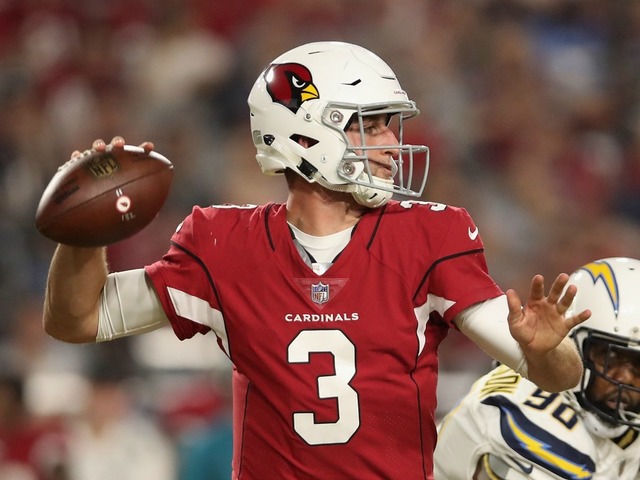
As miserable as the situation is in Buffalo, it might be just as bad in Arizona. This offense came into the year leaning on the ancient Larry Fitzgerald and the return of David Johnson from injury, and so far the former has struggled while the latter has been neutered by scheme. The Cardinals could do nothing offensively through their first three games, and despite having the best veteran quarterback of these five teams, it only took that long for them to decide to send Sam Bradford to the bench.

On paper Rosen’s debut looks solid but unspectacular. On film, it becomes clear that he was the best player on the field on Sunday. He was spectacular throughout the game, especially towards the end as the Cardinals put the weight of the offense on his shoulders. He handled pressure better than he did in college, and he delivered gorgeously precise passes down the field, leading the Cardinals for what should have been a game winning score before their coaches got conservative and their kicker let them down.

As we discussed with Darnold above, a first game can often lead to some wrong impressions. Rosen could easily fall off just as sharply as Darnold did, and his debut against Seattle could be forgotten by the end of the year. But in his one game he has put up the best performance of any of the rookie quarterbacks thus far, and that’s a reason for the Cardinals to be excited about the quarterback they had to settle for after the other three were off the board.

Lamar Jackson, Baltimore Ravens
Of the quarterbacks in the first round, Jackson is the only one who is still on the bench, watching as Joe Flacco has ridden an excellent defense and his own bare competence to a 3-1 record. Of course, this doesn’t mean that Jackson hasn’t had an opportunity to make it onto the field. So far this year he has participated in 47 offensive snaps, lining up everywhere from quarterback to split wide receiver. And in most cases, the usage he has received is utterly stupid, drawing all the attention to himself and then immediately receiving the ball. He’s nothing but a screen threat as a receiver, and he is essentially an extra running back when he takes the snap. In their blowout win over Buffalo he attempted four passes, and other than that he has not even dropped back to act like he’s planning one.

This is a weird situation, and I don’t know what the future holds for Baltimore. On the one hand, Jacskon gives them a much higher ceiling if he can take over and gradually adjust to NFL speed. On the other hand, he is an incredibly unproven and unpolished player who could sink their entire season if given control of the team. This is a difficult decision the Ravens will have to make, either during the season or sometime afterwards. I think that ultimately they will keep Jackson on the sideline for most of the season, even as he remains one of the biggest and most intriguing mysteries in the league.