Tuesday, April 26, 2016

2016 Mock Draft: GM for the Day


We’ve almost made it. Just a couple more days until the first round of the NFL Draft. Just as I’ve done for the past two years, I’ll be making two mock drafts. Tomorrow I’ll have what I think will actually happen, but for today I put together a draft based on how it would play out in the unlikely event that I was put in charge of every single pick for every single team.

1. Los Angeles Rams – Jalen Ramsey, CB, Florida State
I’ll admit that these first two picks are somewhat strange to do from the “if I was in charge” perspective. Both the Rams and the Eagles are here because of trades, trades that never would have happened if I was in charge. The only reason they made these trades was to go after a quarterback, and the only way they justify what they give up is if they can get a franchise starter. But the quarterbacks aren’t the top two players in the draft, so I’ve decided to treat these picks as if the context behind them doesn’t exist.

With the injuries to Myles Jack and Jaylon Smith, the two best players in the draft are Jalen Ramsey and Laremy Tunsil, and they will go number one and two in some order. The Rams spent a first round pick on tackle Greg Robinson two years ago, and even though he’s been a mess since then I think they owe him one more year to pull things together. They are facing a more pressing need at cornerback, where they lost one starter Janoris Jenkins and only have Trumaine Johnson under their control for one more season.

2. Philadelphia Eagles – Laremy Tunsil, OT, Ole Miss
The Eagles are in the same boat as the Rams, a team that traded up to get a quarterback at a position where there really isn’t a quarterback worth taking. But Tunsil would be a great option for them as well, an heir apparent to the aging Jason Peters to anchor the left side of the line while developing star Lane Johnson holds down the right. Of everything Kelly did in Philadelphia, his dismantling of the offensive line was the most glaring error, and the Eagles need to take advantage of this opportunity to rebuild it.

3. San Diego Chargers – Joey Bosa, DE, Ohio State
The Chargers need help at basically every position on their roster other than quarterback. Tunsil would be the absolutely perfect fit, but with him off the board, I’ll go with the next best player available. Bosa gets a slight edge over DeForest Buckner, who fits the Chargers scheme better but carries significantly more risk. There are reports out there now that teams are souring on Bosa, but I think his overall abilities make him the sort of player who will provide consistency and playmaking ability to a defense that desperately needs it.

4. Dallas Cowboys – DeForest Buckner, DE/DT, Oregon
Buckner only drops one more spot, to a team similarly bereft of talent on the defensive side. Schematically it would make more sense to flip these players, but they are both talented enough that a defensive coordinator should be able to plan around them. Buckner will bounce around a lot of positions on the line, giving the Cowboys the flexibility to shape their defense however they see fit behind him.

5. Jacksonville Jaguars – Vernon Hargreaves, CB, Florida
This was the first really difficult pick to make. The Jaguars have one of the most exciting young offenses in the NFL, but they desperately need talent on defense. Unfortunately, three of the five best defenders are off the board, and the other two are facing serious knee injuries. I considered grabbing Myles Jack here, but that sort of risk wouldn’t make sense for the Jaguars at number five. The biggest concerns with Jack are about his long term future, the future the Jaguars are building towards. It would make more sense for a team with a shorter window to try to get him for immediate impact. So instead I went with Hargreaves, a bit of a reach but still an impact contributor at a position the Jaguars desperately need.

6. Baltimore Ravens – Shilique Calhoun, DE/LB, Michigan State
Here’s a pick where I break sharply from conventional wisdom. Most people have Calhoun as a second round pick, worried about his slight frame and limited pass rushing arsenal. I see a long and rangy athlete who excels in space and can contribute in a smart and versatile defense. This is just the sort of player the Ravens need, someone to bring pressure off the edge once Suggs and Dumervil move on.

7. San Francisco 49ers – Jared Goff, QB, California
This is a dream come true for 49ers fans, and for fans of Chip Kelly. I can think of no better pairing of scheme and talent than Goff in San Francisco. He is the fit for Kelly’s system that everyone thinks Colin Kaepernick is, a quarterback who excels at reading the field before the snap and getting the ball out of his hands from the shotgun. It’s almost a shame that we’re never going to see this, that Goff is going to be stifled under Jeff Fisher’s bland scheme while Kelly is stuck running his offense through a blind cannon of a quarterback.

8. Cleveland Browns – Ezekiel Elliot, RB, Ohio State
There are rosters barren of talent, and then there’s the Cleveland Browns. Any player they take makes sense with their roster, so they might as well go for the best talent available. Positional value excluded, you can make an argument that Elliot is the best player in this class. His versatility will make him an immediate weapon for the Browns on every single play, a piece they can attempt to rebuild their offense around.

9. Tampa Bay Buccaneers – William Jackson, CB, Houston
The defensive prospects are really running off the board, and we’re beginning to have to reach for players who probably don’t belong in the top ten. But Jackson could very well turn out to be worth it, if he can harness his athleticism and ball skills to become a top quality cornerback. Tampa Bay has a pair of superstars on their defense in Gerald McCoy and Lavonte David, but so far they haven’t been able to put together a consistent and effective unit. Jackson will give them a star on the third level of the defense, the next step in filling out the talent on that side of the ball.

10. New York Giants – Myles Jack, LB, UCLA
Above I said that the best fit for Jack would be a team with a narrow window. I’m not sure if the Giants qualify, but if they have any chance of competing for another championship with Eli Manning at the helm, they’re going to need immediate contributors. This team has a lot of holes, but Jack is versatile enough to fit wherever they need him. It seems like the Giants haven’t had a quality linebacker in twenty years, but this draft could give them the opportunity to change this.

11. Chicago Bears – Noah Spence, DE/LB, Eastern Kentucky
There is just a tremendous need for defensive talent among the top teams in the draft, and the Bears are another example who could use players at every single possible level of their defense. Spence will give them the pass rushing threat they’ve been searching for ever since Julius Peppers began to decline, a poor man’s Von Miller sliding into the role in John Fox’s defense.

12. New Orleans Saints – Laquon Treadwell, WR, Ole Miss
I do have some worries about Treadwell’s athleticism, especially after his miserable Pro Day performance. A lack of speed does matter in the NFL. It will keep him from generating major separation, will allow cornerbacks to recover if he beats them off his initial break, and will overall limit his ability to make dynamic plays. If Treadwell is going to succeed, he will need help from a quarterback. He needs someone who can fit the ball into the tight windows he will generate, who will hit him just as he’s coming out of his break before the defender can erase the separation. Drew Brees is one such quarterback, and Treadwell has the skills to take over in the role that Marques Colston found so much success in.

13. Miami Dolphins – Eli Apple, CB, Ohio State
Miami is a weird team in that they have no glaring holes but also have no positions where you feel genuinely comfortable. They can take any player in the draft, but there’s no guarantee that player is better than what they already have. So they continue the run on cornerbacks, grabbing the gifted yet raw Apple. He won’t have the immediate impact of the other top cornerbacks in the draft, but he is still very young, and he could develop into a star down the road.

14. Oakland Raiders – Josh Doctson, WR, TCU
The Raiders landed a star in receiver in Amari Cooper last year, and this year they add another weapon to Derek Carr’s arsenal. Doctson doesn’t fill as pressing a need as several other players on the board, but he is the best player available. His ability to stretch the field and high point the ball will add an element of explosiveness to this offense, freeing Cooper to shred defenses underneath and giving Carr multiple options on each and every play.

15. Tennessee Titans – Andrew Billings, DT, Baylor
In my prospect breakdown I said that I wouldn’t take Billings in the top twenty of the draft, but the run on defensive talent has made him intriguing, and in retrospect I might have been a bit too harsh. He is absolutely dominant in the running game, and he shows enough as a pass rusher that he might be able to develop into an every down player going forward. Drop him next to Jurrell Casey, and the Titans have a truly scary defensive line, with the ability to add even more talent with the other picks they acquired from the Rams.

16. Detroit Lions – Taylor Decker, OT, Ohio State
Matthew Stafford’s pass protection was a nightmare at times last year (the memories of what the Vikings did to him may still make him flinch periodically as he walks down the street). Decker needs some work, and I don’t think he’s ready to start immediately. But down the line he could turn out to be a quality left tackle, another piece for their current offense or a player to build around if they decide to tear things down.

17. Atlanta Falcons – Leonard Floyd, DE/LB, Georgia
A year ago Atlanta tried to improve their pass rush by grabbing Vic Beasley with the eighth overall selection. It hasn't worked out yet, and even though I think Beasley will give them more this year, it won’t hurt to add another threat. Floyd is more versatile than Beasley, and he can contribute as a stand up linebacker in addition to an edge force, bringing the sort of length, athleticism, and flexibility that is needed for linebackers in Dan Quinn’s system.

18. Indianapolis Colts – Ronnie Stanley, OT, Notre Dame
Indianapolis needs help everywhere except for quarterback, but most of all they need to find a way to protect their quarterback. Anthony Castanzo is solid at left tackle, but they have holes at just about every other position on the line. Stanley will slide in immediately at right tackle, where he’ll have a couple seasons to gain experience before moving over to protect Luck’s blind side.

19. Buffalo Bills – Jack Conklin, OG/OT, Michigan State
There are a lot of rumors that the Bills are interested in a quarterback, but Tyrod Taylor did enough good things in 2015 to earn another season. They have much more pressing needs elsewhere on their roster, starting with their offensive line. I’m not particularly high on Conklin as a tackle, but I think he has tremendous potential as a guard. The Bills can try him out at right tackle if they think he fits, or they can place him immediately at guard. Either way, it’s an upgrade over what they have right now.

20. New York Jets – Carson Wentz, QB, North Dakota State
At a certain point this whole premise does become a bit of a joke. What good does it really do to break down the fit of a player who absolutely is not going to be available for the Jets to pick? But even though he’s going to go number two, I think twenty is a more reasonable range for Wentz. He has good upside, but there are a lot of flaws that need fixing as well. The Jets may not be the place for him to develop—in New York he’d be forced into the starting lineup immediately—but they can’t pass up this opportunity to fill the biggest hole on their roster.

21. Washington Redskins – Michael Thomas, WR, Ohio State
With the addition of Josh Norman the Redskins have closed one major hole on their roster, freeing them to make more of a luxury pick. They have a pair of talented receivers in DeSean Jackson and Pierre Garcon, but both are on the downside of their career. If Kirk Cousins is the long term answer at quarterback, he’s going to need a talented target who can grow and develop with him. Thomas isn’t as good as the top two receivers, but he is the best player available at number twenty-one.

22. Houston Texans – Jason Spriggs, OT, Indiana
Outside of DeAndre Hopkins the Texans don’t have much on offense. They need a running back, they need a wide receiver, and $72 million of Brock Osweiler aside, they probably need a quarterback too. But none of these positions offers a player worth taking, so they will try to improve their line instead. Duane Brown has held down the left tackle position for nearly a decade, but he has slowed down over the past couple years, and they need an investment if they are going to build a successful offense going forward.

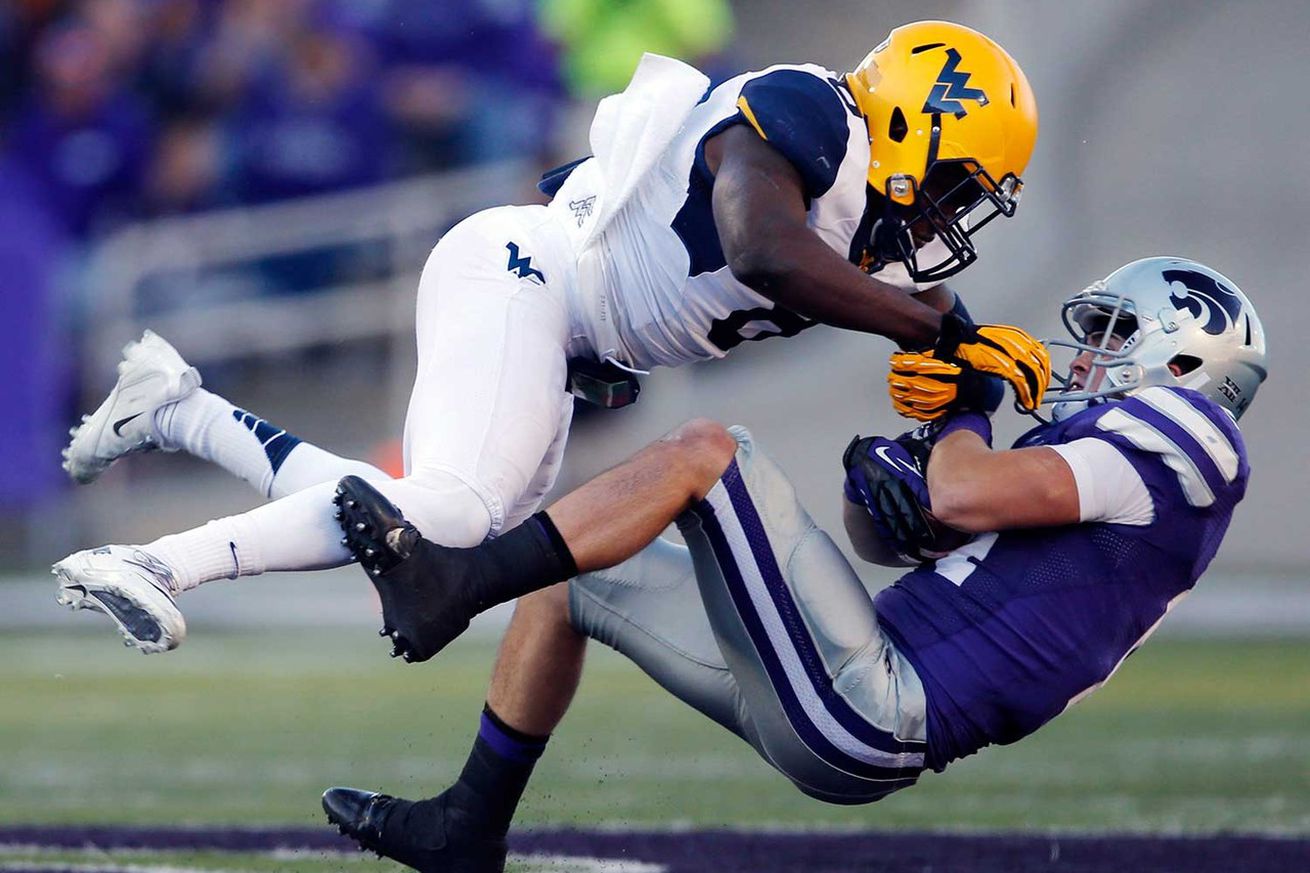
23. Minnesota Vikings – Karl Joseph, S, West Virginia
I really want to give the Vikings a receiver, but with the top three options off the board I’m going to address their next biggest weakness. Neither Michael Griffin nor Andrew Sendejo is an answer on the back end, and this one major hole held their defense back from being a truly elite unit last year. Despite listing Darian Thompson higher in my safety rankings, I went with Joseph here. Thompson can fly across the field and make a lot of fantastic plays, but the Vikings already have a safety who can do that in Harrison Smith. What they really need is a back end defender, someone they can trust to lock things down while Smith wreaks havoc doing different things on every single play.

24. Cincinnati Bengals – Tyler Boyd, WR, Pittsburgh
The Bengals didn’t have a particularly deep receiving corps to begin with, and that was before they lost Marvin Jones and Mohamed Sanu to free agency. They can’t build an offense just around passes to AJ Green and Tyler Eiffert, and they need someone who can attack teams over the middle of the field. Boyd isn’t the most athletic receiver, but he brings a good combination of skill, size, and quickness that will make him an immediate contributor and a reliable target for Andy Dalton.

25. Pittsburgh Steelers – Mackensie Alexander, CB, Clemson
There is no more obvious need in the NFL than Pittsburgh’s at cornerback. The situation is bad enough that most of their fans breathed a sigh of relief after they resigned William Gay this offseason. They will be helped some by the return of Senquez Golson, their second round pick from 2015 who missed his entire rookie season due to a shoulder injury. But adding Alexander will give them an even better chance of fixing the one part of their team holding them back from Super Bowl contention.

26. Seattle Seahawks – Kevin Dodd, DE, Clemson
Seattle desperately needs help on the offensive line, but with no more linemen worth taking in the first round, they’ll settle for grabbing the best player available. Dodd will have a chance to develop as part of a rotation with Michael Bennett, Cliff Avril, and Frank Clark for the next couple years, eventually taking over as an every down player down the road. He isn’t the fastest rusher, but he provides a lot of power, the sort of player who can slide in and abuse guards on third downs much as Bennett has done ever since arriving in Seattle.

27. Green Bay Packers – Shaq Lawson, DE, Clemson
The Clemson defensive ends go off the board one after the other. I was tempted to give the Packers Reggie Ragland with the idea that he would free Clay Matthews to move back to the outside full time, but that’s a move they should make regardless of who this pick is. It’s no reason to pass up on a better player at a position of need. Lawson will give them a consistent edge threat opposite Matthews, with the potential to grow into a star down the road with good coaching and a little bit of luck.

28. Kansas City Chiefs – Reggie Ragland, LB, Alabama
Derrick Johnson’s return from a torn Achilles last year was remarkable (if overshadowed by Eric Berry), but he is still a 33 year old linebacker with at most a couple good years left. Ragland doesn’t provide the complete impact you want to see from a modern day NFL linebacker, but he excels at his limited skills, stuffing the run and controlling the box. This defense is old, and an infusion of young talent in the middle is just what they need to go along with other young talent like Marcus Peters and Dee Ford.

29. Arizona Cardinals – Robert Nkemdiche, DE/DT, Ole Miss
There are a lot of reasons for concern around Nkemdiche, but I can’t think of a better place for him to go than Arizona. Here he will have the support of Calais Campbell, a similarly talented player who took some time to develop, and Tyrann Mathieu, another college star who struggled with then overcame off the field trouble. On pure talent alone he is one of the best players in the draft, and if he can control himself off the field and harness his skills on it, he can be a game changing player on the defensive side of the ball.

30. Carolina Panthers – Corey Coleman, WR, Baylor
Coleman is absolutely electric. Streaking down the field or running with the ball in his hands, he can do things that other players are simply not physically capable of. His game needs a lot of work before he can be a reliable every down player, but in the right hands he can be a dynamic weapon right away. With Kelvin Benjamin coming back Carolina’s need at receiver is slightly lessened, but they still can’t just count on what they had last year. Coleman will bring another element to their offense, pushing an already dangerous unit into elite territory.

31. Denver Broncos – Sheldon Rankins, DT, Louisville
What to get a team that just won a Super Bowl and is now looking at Mark Sanchez starting at quarterback? They need a quarterback, but there’s none worth taking. They need an offensive lineman, but it isn’t quite worth reaching for Cody Whitehair. Their defense is loaded, but that is still the best way to go. After losing Malik Jackson to free agency, they need some fresh beef in the middle. Rankins isn’t going to stuff up the run, but he will make this pass rush even more lethal than it already is. Denver may not be within reach of another Super Bowl run, but if their defense can keep things up, they can push for the playoffs again.

Saturday, April 23, 2016

2016 Linebacker and Safety Prospects

I really don’t know how to write up this one. The linebacker position group is one of the best and deepest in the class, boasting two top five talents to go along with intriguing prospects scattered through the first couple rounds. I had more fun watching these players than just about any position in the class, and on a pure talent basis it would be a lot of fun to write them up.

But unfortunately, pure talent isn't always enough in the NFL. And we’re seeing the ugly side of things with two players from this year’s class. I put off writing this for as long as I could in the hope that we would receive good news about Notre Dame star Jaylon Smith. Instead we found out that he will miss the entire 2016 season, with his long term future still in doubt after that due to potential nerve damage to his knee. And to make matters worse, UCLA linebacker Myles Jack has found himself on the wrong end of bad medical news as well. After months of reports suggesting he was making good progress recovering from a torn meniscus, a medical recheck has reportedly scared a number of teams away. There is worry about irreparable long term damage to the cartilage in his knee, which could limit his effectiveness and cut his career short.

This sucks. There really isn’t any other way to put it. It sucks from a fan’s perspective, and it sucks from an analyst’s perspective. I don’t know how to evaluate these two players, how to weight the merits of injuries I won’t pretend I understand. So here’s how I’m going to do this. I’m going to give them an entire category to themselves, the number one and number two linebackers on my board starting things off. I won’t say that I would take them above the others, but for these purposes I will be breaking them down as if there are no injury concerns at all.

Oh, and at the bottom I have two of the top safeties in this draft, since I haven’t gotten around to breaking them down anywhere else yet. And now that I’ve bummed both you and myself out, let’s get to the final seven players I’m going to break down heading into next week’s draft.

The Injured Superstars
Jaylon Smith, Notre Dame
Throughout this process I’ve seen many players that I absolutely love, players that I have called top ten prospects, but so far I haven’t found anyone who I would comfortably say is worth the first overall pick. Joey Bosa, DeForest Buckner, Laremy Tunsil, Jalen Ramsey, Ezekial Elliot, and Jared Goff are all great players, but in each case there is something holding them back. The same cannot be said for Smith (again, remember that I’m pretending he is completely healthy for this writeup).

In three years of breaking down draft prospects I haven't seen a linebacker with a game anywhere near as complete as Smith’s. He can do everything you could possibly ask of a linebacker. He attacks downhill and meets blockers in the hole. He scrapes sideline to sideline with incredible athleticism. He is stellar dropping into zone coverage, and he is more than capable of playing in man based on the limited reps I saw. He didn’t get many opportunities to rush the passer in college, but he showed enough to convince me that he can definitely contribute in that part of the game.

What really sets Smith apart is what he can do in traffic. His footwork is incredible, and his single step burst is elite, allowing him to stop and start at will to maneuver his way through a congested box. Even if a lineman can get hands on him, he is too shifty laterally for them to maintain the block, and he absolutely destroys slow developing running plays. He is so good in this area that I almost don’t like how often he chooses to scrape over the top. Normally he makes the smart read on the play (though he can occasionally be fooled by misdirection), but for a player like Smith, the smart read isn’t always the best one. His ability to move through blockers and to recover from poor choices should free him to be far more aggressive than he actually is.

Smith is a rare breed of linebacker and an absolute pleasure to watch. He is a Pro Bowl caliber player from the moment he steps onto the field, a game changer that can be the centerpoint of any defense. Inside linebacker isn’t the most valued position in the NFL, but his skills are not limited to that role, and he is absolutely worthy of being the first player taken off the board.

Myles Jack, UCLA
Following the news of Smith’s injury, I was ready to elevate Jack to the rank of the top prospect in the draft, until his own knee issues forced me to change my entire approach to this writeup. So I will now just call Jack the second best player in the draft, an elite talent with nearly unlimited upside who just so happens to be the second such player in his position group this year.

Jack isn’t as talented across the board as Smith is, but where he excels he is an absolutely dominant player. He isn’t as good at navigating through traffic, though he does have the ability blow a blocker backwards with an explosive punch. He sometimes has issues with tackling, going for a big hit or a strip rather than wrapping a ball carrier up. He also doesn’t offer much as a pass rusher either, which is fine since he is so good in coverage that I don’t see any reason to ever send him into the backfield.

Seriously, I can’t understate how good Jack is in coverage. He turns and runs with receivers better than some of the top cornerbacks in this draft, using his physicality to knock them off their routes without surrendering any ground himself. He rides in their hip pockets all the way up the field, mirrors every break they make, and makes excellent plays on the ball when it’s in the air. He’s good enough that some teams reportedly like him more as a safety than a linebacker, though I think he’s better off staying where he played in college. The ability to cover is the most difficult trait to find in modern linebackers, and it might be the most valuable as well. Jack will enter the league as one of the five best coverage linebackers in the game, and he will only get better.

The Other Linebackers
Reggie Ragland, Alabama
Fifteen years ago Ragland would have been considered everything you could want from a linebacker prospect. He is a big, physical run stuffer who eats people alive on the inside, the sort of old school linebackers that have gone out of style in the NFL. His weaknesses will drop him in the draft, but there is still a role for players like him in the league, even if it has diminished over time.

Ragland is an excellent player when he can play strictly downhill. He attacks blockers as they come towards him, and he uses his hands to throw them aside, freeing himself while keeping his balance to get in position to make a play on the running back. He is an excellent tackler who hits runners square and stops them in their tracks. As a run defender, he will be one of the most valuable players in the league on first and second down.

The problems with Ragland come in other situations, when a team is trying to pass the ball. Simply put, he offers next to no value in the passing game. He’s a smart player, and he gets good positioning on his drops, but he doesn’t have the agility or the instincts to track receivers in man or in long developing zone coverages. He doesn’t have the ability to flow sideline to sideline, and he lacks the sort of final burst necessary to make plays in space.

This will be a problem in the NFL, and it was a problem in college as well. At Alabama he regularly rotated down to defensive end in passing situations, playing with his hand in the dirt and rushing off the edge. He showed some flashes doing this, even if his lack of burst limited his ability to finish plays. I’m not certain if he can or will take this role in the NFL, but the potential definitely helps mitigate some of the negatives drawing down his value.

When writing up the defensive tackles I discussed Andrew Billings, one of my favorite players in the draft who is similarly limited in what he can do. In that case I said that I wouldn’t spend a top twenty pick on a player who won’t contribute on every down, and I’m sticking with that here. Ragland has even less potential than Billings as a pass defender, and even though I think he’s a first round pick, I would probably wait until the final five selections.

Su’a Cravens, USC
I started watching film of these players the week after the Super Bowl. The list I selected was based on potential first round picks as they were viewed at that time, with a few late risers thrown in when I could find the time. As long and tumultuous as the draft process is, there are bound to be players who slip out of first round contention, and this year there may be no finer case than Cravens. Once considered a first round pick, he now likely won’t go until the end of the second. There are reasons for this, but I think it’s a bit of an overreaction, as he seems a player who is well suited to being grabbed early in the second round by a team that feels they can make a creative use of his skills.

The first question we have to ask with Cravens is what position he plays. At USC he played something of a hybrid between linebacker and safety, spending a great deal of his time lined up across from a receiver in the slot. When he was asked to bump inside to a pure linebacker position, he saw mixed results. He has good downhill burst, and he can flow from sideline to sideline, but he struggles finding his way through traffic and doesn’t add much as a pass rusher.

As a linebacker Cravens has a lot to work on, but he brings plenty of interesting skills to the table. He is very good at meeting blockers and engaging with his hands, and if he can develop better moves to disengage he can make himself a solid box defender. And while he isn’t at Jack’s level in coverage, he is the next best thing in this draft. He is a very smooth athlete, and he can make plays in both zone and man on receivers in the slot. There are plenty of questions surrounding Cravens, but there is potential there as well, and in the right system he can be a valuable contributor to a defense.

Darron Lee, Ohio State
Darron Lee is one of the trickiest players in this draft to watch film of. Watching him requires paying constant attention, because if you look away for even a second, he’ll be in a completely different part of the field by the time you look back. His range is his defining attribute, and it’s why he is likely to be a mid first round pick, even if his other attributes are sorely lacking.

Lee covers a lot of ground from sideline to sideline, but he also has excellent short area quickness. He is dangerous as a blitzer from any direction, with a first step that is often enough to shoot him past the linemen and into the backfield. He can get overpowered on initial contact with a blocker, but after being knocked back a couple steps he is able to simply run around the bigger, slower lineman. His final burst allows him to close distances and make tackles that other linebackers simply couldn’t reach, and his speed allows him to take an extra fraction of a second to make his reads before attacking downhill.

As athletic as Lee is, it does not translate to pass defense. Down the line he has the skills to turn into a quality pass defender, but right now he is a liability on that front. He sits on his heels and isn’t ready to burst downhill to make a play on the ball, and he has no understanding of route concepts to be able to track receivers out of their breaks. He spends a lot of time sitting in the middle of no man’s land and then chasing the receiver once the ball is caught.

Lee has potential, but he isn’t ready to play in the NFL right now. He is undersized, and he is unpolished, and his flaws will make him a hole on any defense he is inserted into. The injuries to Jack and Smith may push him up higher than he deserves, but I think he really is a second round value, a high risk player who doesn’t offer enough reward to make him worth a high selection.

Safeties
Darian Thompson, Boise State
Your opinion on Thompson will vary based on what you want from a safety. If you want someone who can flip the field and make stunning plays, he’s the best safety in the draft. If you want a player you can count on to hang back as the last line of defense, he doesn’t belong on your team. Thompson’s combination of length, instincts, and athleticism makes him dynamic in a way the other safeties in this draft cannot touch, but aggression comes back to bite him, producing big plays for the offense nearly as often as he does for the defense.

Thompson is the best playmaker at any defensive position in this draft. At 6-2 and 208 pounds, he is big for a safety, and that length combines with excellent ball skills to make him a consistent threat in pass coverage. He can cut down passing lanes to almost nothing, and he can flip the field with incredible interceptions. He brings a similar aggression to the running game, where his length allows him to fend off blockers and corral running backs in space.

Every game Thompson makes a few plays that leave you thinking he could be a top ten pick. And every game he makes a few plays that you can only shake your head in response to. He bites hard on every fake he sees, and play action can leave wide receivers running wide open behind him. He flows well to the ball, but he often comes in out of control, and a single cut can send him stumbling helplessly past a runner. And every now and then he will take an utterly atrocious angle to the ball, turning what should have been a short gain into a huge play.

There is more good than bad in Thompson’s game, but the bad can be very, very bad. He isn’t the sort of player who can just plug into a lineup right away, and he’ll need a hell of a coach if he’s ever going to become the best he can be. But defensive schemes have evolved, and there is more space now than there used to be for a free ranging, playmaking safety. Thompson's abilities are intriguing enough that I would consider him in the latter portion of the first round, a project with the potential to someday turn into a Pro Bowl safety.

Karl Joseph, West Virginia
You could be forgiven for having Joseph ranked as the top safety in the draft. In all likelihood he will be the first safety off the board, and if I had to choose between him and Thompson, it would take me a while before I was confident going for the higher upside option. Joseph is a much more polished player and a much safer option, and he too is worthy of going in the first round.

Joseph isn’t as versatile as Thompson, but he still does a lot of things well. He is at his best in deep coverage, where he can read and react and flow while the ball is in the air. He covers a lot of ground and makes excellent plays on the ball, consistently demonstrating an ability to go outside the frame of his body to make difficult catches. He doesn’t come down incredibly hard against the run, but he makes solid tackles in space, and he will get more comfortable with aggression as he gains experience.

Joseph is a punishing hitter, but he isn’t particularly big, and his lack of size will cause him problems on the next level. He relied on his ability to push slot receivers around at the college level, an advantage he will lose when he reaches the NFL. Matchups against tight ends will be a particular challenge, as larger receivers showed the ability to outjump and outmuscle him for the ball while it was in the air.

The other concern with Joseph is injuries. He missed a large chunk of his senior season with a torn ACL, and there is reason to worry that his aggressive style and slight physique could lead to regular injury issues in the NFL. It’s a risk that drops his value, low enough that I would probably select him only as the second safety off the board.

Tuesday, April 19, 2016

2016 Offensive Line Prospects


It is a cliché to say that offensive line is the most overlooked position in football, but that doesn’t mean it’s not still true. Linemen are consistently overlooked by casual fans, and even I find myself falling victim to this at times. Fortunately, the people running these teams have a better understanding of the importance of an offensive line, and in all likelihood we will see five or six first round selections spent on linemen in this year’s draft.

Everyone knows linemen are big, but it is just as important that they are athletic. Playing on the line is all about the hands and the feet, getting into position to seal off a defender and then using hands to control him. Proper blocking technique requires walking a delicate line. Good linemen need to be able to grab hold of the defender across from them, but they can’t do it in a way that would draw a penalty. They need to constantly move their feet to remain in good position while getting their hands involved to fend off a defender, skills that need to translate every play in both the running and the passing game.

Laremy Tunsil, Ole Miss
Until last Thursday Tunsil was considered the favorite to be the first player selected in the draft, and even after Los Angeles’s move to the top of the draft, he is still unlikely to drop out of the top five. He is very clearly the top offensive lineman in the draft, a view held even by those who are higher on the rest of the class than I am. Tunsil is a plug and play left tackle from day one, the sort of player who will lock down the position for the next ten years.

Tunsil’s defining attribute is his footwork. He is incredibly light on his feet, keeping them constantly chopping to give him almost unlimited mobility in all directions. As a pass blocker he starts every play with a relatively shallow pass set, which for most other players would leave them vulnerable to a speed rush around the edge. But Tunsil’s athleticism is a match for any pass rusher he will face, and if the defender comes upfield, he has more than enough ability to recover and cut him off. The flexibility to be able to take this shallow set makes it impossible to beat him inside, and his lateral quickness keeps even advanced secondary moves from working against him.

The footwork plays just as crucial a role in his run blocking. Tunsil isn’t overpowering with his strength, and he’s not going to drive a defender ten yards backwards. But with his powerful hands and his quick feet, he can get his man turned any way he wants him, sealing off the hole and giving his running back an avenue to run through. Tunsil is a rare athlete on the offensive line, and his ability to move and to make blocks in open space will give an offensive coordinator options that simply wouldn’t be available on most other teams.

If I have a concern with Tunsil, it would be with his punch. He isn’t super aggressive with his hands, and he will sometimes sit back on his heels and let a defender get into his chest. This didn’t translate to much trouble in college, but it could cause problems against more powerful NFL rushers. But again, Tunsil’s footwork will save him, allowing him to adjust his balance and anchor against whatever is thrown his way.

In many ways Tunsil is like the very first player I wrote up this year, Jalen Ramsey. Like Ramsey, I wasn’t all that impressed the first time I watched him. It was only after three games of consistent dominance that I realized how good he is. He makes it look so casual that you almost don’t notice him, which is possibly the highest praise you could give an NFL lineman. While I don’t think he’s the best player in the draft, it wouldn’t have been ridiculous if he’d gone first overall. As it is, I think he is comfortably positioned in the top five.

Taylor Decker, Ohio State
Decker is the sort of lanky, athletic linemen that NFL teams love to grab in the first round. At 6-7 and 310 pounds, he has a long, lean frame that gives him a wide range of movement and makes him tough to beat in pass protection. His arms aren’t overly long, but they are more than satisfactory coupled with his aggressive strides and broad shoulders. Just drawn on paper, he is one of the most impressive linemen in the class, and his ceiling could be up there with any other tackle.

Decker combines his physical gifts with very solid technique. His feet aren’t as light as Tunsil’s, but few people’s are, and Decker firmly belongs in the next group down. He does a good job shadowing the defender in front of him to cut down any lanes to the quarterback. A long stride helps hide any mistakes, giving him the ability to explode backwards or come back downfield to handle any inside moves. And for a player as tall as he is, Decker doesn’t seem vulnerable to bull rushes, anchoring and holding his ground even when pass rushers get into his chest.

There is one glaring hole in Decker’s game, and it presents itself in both run and pass blocking. His upper body isn’t particularly strong, and he struggles to contain defenders after initial contact. His performance on the field got me to look up his combine numbers, and I wasn’t surprised to see that he only managed 20 reps on the benchpress, in the 13th percentile among offensive tackles. This definitely shows up on the field, where defenders regularly slide off him and push their way past. He gets beaten around the edge far more often than someone with his length and speed should, usually because pass rushers can absorb his weak punch and push their way through his arms to the quarterback.

These strength issues prevent him from being worth a top twenty pick, and they will cause a major problem if he has to play immediately. But a year or two down the road, after working with NFL trainers on an NFL workout schedule, it’s very possible that he could add the strength he needs. If he does, he will close the biggest hole in his game, and he has the ability to become a Pro Bowl offensive tackle. But that is still an uncertainty, and if it doesn’t pan out, the best he can be is a slightly below average starter.

Ronnie Stanley, Notre Dame
On the actual night of the draft Stanley will almost assuredly be the second lineman off the board, possibly going in the top ten. And on paper, there seems to be reason for that. He has excellent size and decent athleticism, and he was highly productive in three years as a starter. If he’d come out last year, he probably would have been the first tackle taken, but he elected to return to Notre Dame for another year of quality work.

Stanley shares many of the strengths and weaknesses of Decker, and the two aren’t separated by much as prospects. Like Decker, Stanley is a lanky athlete with solid footwork and good movement skills. He doesn’t flow as well to the second level as Decker, but he does a better job moving in his pass set. Also like Decker, he struggles to control defenders after the point of engagement, though it isn’t as glaring or as damaging. He seems more aware of his shortcomings, and rather than leaning his entire body on the defender, he will sit back on his heels, choosing hand fighting over engagement and giving himself more time to react.

Stanley’s punch can be timid at times, and despite tremendously long arm, he is vulnerable to letting defenders into his chest. He does a decent job anchoring with his lower body, but he can still be overwhelmed by power, or at least turned to give up a lane. In the running game, he doesn’t control defenders, and he doesn’t even get his hips turned to seal them off. This part of the game will be a weakness of his right away, and it is something he will struggle with for much of his career.

Stanley’s natural athleticism and grace will make him a capable starter in the NFL, and he could probably slide in immediately in the right circumstances. For some teams this could make him more valuable than Decker, but I still wouldn’t select him in the top twenty.There are too many small things holding him back, and it will take a lot of work for him to clean these up.

Jack Conklin, Michigan State
In Conklin we have the other end of the spectrum from Decker and Stanley. Built like a boulder, his game is based on power rather than athleticism. At his best when he attacks downhill, he can absolutely maul defenders in the running game. His punch knocks people backwards, and his hands latch on like iron vices. Once he has you, it’s nearly impossible to break free, and his feet are quick enough to get him turned to seal off running lanes.

Conklin’s punch is powerful, but it is also inconsistent, often coming in with his hands too wide. This does three things: it causes him to miss the target, it leaves him vulnerable to holding penalties, and it lets defenders into his chest. Conklin anchors well, but he still gets bent backwards far too often, and pass rushers who can transition to a secondary move will have no trouble getting past him. He has a habit of stopping his feet as well, and advanced pass rushers will eat him alive on the edge.

These issues are fixable with coaching, but the same can’t be said of all of Conklin’s flaws. Simply put, he doesn’t have the ability to move side to side in the way the tackles above him can. He doesn’t get good depth on his drop, and he can’t recover to the inside to react to a counter move. Over and over again he is beaten in space, both as a pass blocker and in the running game.

Conklin’s value will depend on how a team decides to use him in the NFL. I think whoever drafts him will try to put him at tackle, and I think this will turn out poorly. Conklin is a below average tackle in the NFL, but he could be a high quality guard. Lateral quickness still matters on the inside, but it’s easier to hide there than on the edge. His strength will make him an asset in the running game wherever he plays, and at guard his flaws can be covered well enough to make him a very valuable piece on an offensive line.

Jason Spriggs, Indiana
There are a lot of little things that hold Spriggs back from being among the top tier of this class, but on the whole he is a very solid player capable of contributing immediately as an NFL tackle. Physical in the running game and athletic as a pass blocker, he provides a nice balance and shows plenty of room for growth. He could probably use to add some weight, but other than that he is physically what you want from a tackle, and he is worth a first round pick for a team that feels they can correct his issues.

Most of his problems are technical rather than physical. He overall displays good technique, but he’s hurt by moments of sloppiness. He has good footwork that gets him to his landmarks quickly and gives him the ability to mirror defenders in front of him, but his feet will occasionally come to a stop at the point of contact. He can recover well due to good lateral agility, but he sometimes will get his hips turned too far, surrendering the edge and letting strong pass rushers push their way to the quarterback.

The most interesting part of Spriggs’s game is his punch. I’m not sure if this is how his coaches taught him or just the way he plays, but after his punch—which is more than effective in stopping an oncoming rusher—he doesn’t really latch on. He prefers to sit back on his heels and handfight with the defender. This gives him room to react, but it also gives the rusher room to work moves, and against elite defenders of the sort he will face regularly in the NFL, he struggled to contain secondary attacks. On the rare occasion he was aggressive, he had a habit of leaning too far forward, compromising his balance and exposing him to embarrassing defeats.

Spriggs can become a high caliber NFL tackle, and his potential could be up there with either Decker or Stanley. But there is a lot in need of fixing here, and it will take some time to make the necessary changes. It’s entirely likely that he settles in as just a middle tier starter, the sort of player who can hold his own but will be exposed just often enough to prevent him from being considered a top flight tackle.

Cody Whitehair, Kansas State
 
Whitehair is another college tackle who will be forced to move inside at the next level, though for different reasons than Conklin. A short stature and short arms hold him back, as does a general lack of physical ability. He doesn’t move well, and he doesn’t overpower defenders in front of him. When he succeeds, it is due to technical skill and positioning, not enough to make him effective protecting the edge.

Whitehair can be a bit too passive at times as a pass protector. He doesn’t get to his landmarks quickly enough, and he has a habit of catching pass rushers rather than attacking them. It’s very easy to run around him, and he can’t force defenders further outside once they do so. But if he can cut them off, he has solid footwork and short area quickness, allowing him to stay in front of the defender and mirror any attempted counter moves.

As a run blocker Whitehair is effective but unspectacular. He doesn’t push people out of the way, but he gets where he needs to go, and he gets his hips turned to seal the play off. His hands aren’t particularly strong, and he needs to keep his feet constantly moving in order to keep the defender from disrupting the play. At times he can get moved backwards, causing problems in the backfield before the runner can get past him.

Whitehair will be a solid guard in the NFL, but he won’t be anything special. A reliable starter, he’s probably better off going somewhere in the second round. He can be trusted to hold his own, but he likely won’t develop into more than he already is.

Germain Ifedi, Texas A&M
For potentially the fourth straight year Texas A&M could have a tackle selected in the first round, and for the second straight year I do not understand the hype. Last year the Bengals used a first round pick on Cedric Ogbuehi, an athletic tackle with excellent feet and useless arms. This year the player everyone is talking about it Ifedi, a prospect with the exact opposite strengths and weaknesses.

For the first second of a play, things go pretty well for Ifedi. He gets a quick start off the ball and gets deep into his pass set, cutting off the corner for the pass rusher. He couples this with a powerful punch and strong hands, latching onto the rusher while his weight anchors beneath him. At 324 pounds he is the heaviest of the linemen I looked at, and he uses that weight to keep himself from being pushed backwards.

Ifedi’s problems show up after the initial rush. His initial burst is fantastic, but after that he is sluggish and awkward, incapable of mirroring the defender in front of him. He can be beaten badly by inside moves, and even when he latches on he struggles to stay ahead, letting defenders tug his arms outside his frame and exposing himself to holding penalties. The problems with his feet are apparent in the running game as well, where he doesn’t seal defenders off from the hole and is absolutely useless trying to block in space on the second level.

Ifedi’s problems appear to be more physical than technical, which makes them a bigger problem going forward. He looks like he might be carrying a few extra pounds on his frame, and losing some weight could give him a little more quickness to work with. But even then there are problems that need to be corrected. Down the road he could turn into something, but for now Ifedi is a player who will surrender a lot of hits and draw a lot of penalties. I wouldn’t dream of taking him in the first round, and I’d let quite a bit of the second round tick away before I would consider pulling the trigger.

Friday, April 15, 2016

2016 Quarterback Prospects


So far I've covered the cornerbacks, wide receivers, defensive tackles, running backs, and edge rushers available in this years draft, but by now we all know that there is really only one position that matters. After the stunning trade by the Rams on Thursday, it now appears almost certain that the first player off the board will once again be a quarterback, with a decent chance that another goes immediately after. And since we’re on the topic, I’ll drop in two quick thoughts on the trade.

1)      Great deal by the Titans, terrible move by the Rams
2)      In the rough draft of this post, I referred to the Los Angeles Rams as “St Louis”. So yeah, apologies for when that happens again in the future.

Quarterback is a very difficult position to analyze because so much of it happens on a level we can’t see. It’s impossible to know what is going through a quarterback’s head on each play, what he is asked to do versus what he ends up doing. But we can still get some sense of how he reads the field by watching him play, and we can study all his physical tools as well. A quarterback needs to be able to endure pressure, to move to give himself lanes to throw, and to fit the ball into tight windows with touch and with power.

And yes, arm strength does matter. The best quarterbacks aren’t limited in any way by the field in front of them and can make throws from sideline to sideline. The real question with arm strength is not whether it matters but how exactly it does, whether there is some minimum threshold that needs to be met after which additional strength provides only marginal return. I don’t know the answer to this, but I think you’ll figure out what I believe by reading through the breakdowns of the six players below.

Jared Goff, Cal
The race for the top quarterback in the draft is a two man show this year, so it shouldn’t be a surprise that I have Jared Goff and Carson Wentz ranked number one and two. They are at the top, and then there is a big gap to get to number three. But from my perspective, I think there’s a decent sized gap between the top two as well, and I am firmly in the Goff camp in this draft.

A lanky, upright pocket quarterback, Goff is by far the most polished passer in this draft. He displays all the subtle nuances you want to see in a quarterback’s game. He’s light on his feet, and he moves well in the pocket, sensing pressure and shifting around to give himself a lane to throw the football. The ball comes out of his hand with good zip, slicing through tight windows across the middle of the field. His anticipation is spectacular, knowing exactly where and how the defenders are moving to get the ball to his receiver at the exact right time. Combine that with remarkable touch, and Goff is the sort of quarterback that will take your breath away with several throws in every game he plays.

This isn’t to say that Goff is a perfect quarterback. There are plenty of flaws to find with him, flaws that keep me from putting him in the same category as the top quarterbacks from last year’s class. He isn’t the most physically gifted quarterback ever, with only functional athleticism and some questionable arm strength. He doesn’t throw a great deep ball and, more concerning, his throws tend to dip as they approach the sideline. I’m reasonably confident he can make all the throws in the NFL, but he won’t be able to go above and beyond in the way some of the elite passers can.

The other major concern with Goff is the scheme that he came from. In college he ran a very simplified spread offense, usually getting the ball out of his hand almost as soon as it reached him. This system is one that has struggled to produce NFL quarterbacks in the past, and there are questions about how successfully Goff can transition to the next level.

These concerns raise some questions, but I think they’re a bit overblown in this case. Goff’s system asked him to make a lot of simple reads after the ball was snapped, but many of these simple reads were based on decisions made before the snap, an area Goff excelled in. When he was asked to go through multiple reads, he looked very comfortable doing so, possessing the ability to move defenses with his eyes to open up windows for his receivers.

The position of quarterback is at such a premium in the league, and it is difficult to properly pin down where a player like Goff should go. On talent alone I don’t think he’s one of the top ten players in this draft, but the scarcity at quarterback makes it very reasonable to push him into the top five. I worry that his ceiling might not be at a true superstar level, but I am comfortable with his floor as, worst case scenario, a league average quarterback.

Carson Wentz, North Dakota State
Carson Wentz looks like a quarterback. He is huge, and he has a cannon of an arm, capable of making any throw to any part of the field. The ball looks beautiful coming out of his hand, a perfect spiral that stays tight to wherever it finally ends up. His accuracy is excellent, lacking the splash of Goff’s but with more consistency. Add to this frame and this arm some quality athleticism, and he is in many ways built like a perfect quarterback prospect.

But, repeating what I said for Goff above, Wentz is not perfect. The tools are all there physically, and he is coming into the league out of a system that bears more resemblance to an NFL offense than any of the other passers I looked at. He spent a lot of time under center, he knows how to take a drop and how to run play action, and he should have an easier transition to an NFL scheme than most.

But there are problems with Wentz, issues that make me seriously concerned about whether or not he’ll be able to work out at all in the NFL. And most of it comes back to his level of competition. Playing at North Dakota State, Wentz likely has never faced a defense boasting anything near NFL talent, and the jump in competition will be a shock to his system. The easy path he’s had has allowed him to get away with a number of flaws that will be exposed at the next level.

There are a lot of little things that hold Wentz back from being a truly polished passer. Throwing the ball at North Dakota State, he usually had wide open windows to fit the ball into. This gave him plenty of margin for error, and he took full advantage of it, consistently struggling with ball placement. And despite playing in a pro-style inspired system, he wasn’t asked to make too many complex reads, and he had a habit of locking in on receivers. My greatest concerns are with his footwork, which can get very sloppy when not executing a straightforward timing pass. His feet have a habit of coming to a stop after his initial drop, leading to inaccuracy when he attempted to reset and issues escaping pressure. As athletic as he is, Wentz can become somewhat of a statue in the pocket, and he doesn’t offer much in the way of improvisational skills.

These are mostly small things, and each of them can be corrected at the NFL. But together they create a much bigger problem, the sort of thing that could stifle a career. Goff versus Wentz is another classic case of security versus upside, and while I normally think the value of a top tier quarterback is enough to justify a sizeable risk, I just can’t see Wentz being worth a selection in the top ten.

Christian Hackenberg, Penn State
Let me start by saying this: Christian Hackenberg is not a good quarterback. Of the six on the list, he would be the sixth I’d pick if I had to win a game tomorrow. He hasn’t been a good quarterback in two years, and there is no reason to think that will suddenly change upon his arrival in the NFL. Whichever team drafts him should do so with the intention of him being a project, someone they might turn to if everything breaks right a couple years down the road.

As a quarterback he doesn’t offer much, but as a project it’s hard not to get excited by what he could be. The story on Hackenberg is well known by now, a five star recruit who came into Penn State and had a stellar freshman year. But after the 2013 season, head coach Bill O’Brien left for the NFL, and replacement James Franklin brought with him a system that did not fit Hackenberg’s skills. Added to an offensive line that was so bad they might as well not have existed at times, it’s no surprise that Hackenberg was wretched in 2014 and poor in 2015.

This is the popular narrative, and there is some truth it. Hackenberg was put into a situation in which few quarterbacks would succeed, and even though he didn’t make the most of it, it’s hard to hold it against him. And the talent is still there, a better pure thrower of the football than either of the players I have ranked above him. For each of the quarterbacks I studied I watched three games, and of the eighteen games I saw, the most impressive came from Hackenberg his freshman year against Nebraska. The talent is there, and he could become a high caliber NFL quarterback.

But that is the best case scenario, and there are plenty of reasons to think he won’t reach this level. The situation around Hackenberg definitely played a part in his struggles, but it was never the whole problem. Hackenberg deserves some criticism as well for showing no ability to adapt himself to the situation, holding the ball as the pocket collapsed around him and half-assing his way through the offense he found himself in. Based on what I saw on the field and the reports I’ve read of his interviews, I would worry about his overall attitude, and I would have to have several long conversations with him before I was willing to turn my team over to him.

There are more specific football reasons as well to be skeptical of Hackenberg. His greatest asset is his arm strength, but at times it appears that this is the only tool he is aware he possesses. He can fire balls into tight windows like a superstar NFL passer, but he completely lacks any finesse to his game, regularly trying to fire rockets when the situation calls for touch. His footwork got progressively worse during his time in college, leading to egregious errors in accuracy, and it will take some time just to unlearn the bad habits he picked up over the past couple of seasons.

Is Hackenberg salvageable? I think so, but there’s no way to be sure. He needs an environment where he can spend time on the bench, where he can be the backup for a couple years before taking over as a starter. He needs a coach who will work with him and a team that will show him patience. And as talented as he is, he won’t find any of these things if he is drafted in the first two rounds. Hackenberg could be a superstar someday, but the downside of taking him high is impossible to ignore.

Cardale Jones, Ohio State
The only bigger puzzle in this draft than Hackenberg is Jones, another big and gifted passer with a missile launcher for an arm and not a whole lot else. It definitely seems strange that a quarterback who was benched in the middle of his final season would have any shot at the NFL, but nothing about Jones’s path to this point makes sense. Was it not for a couple of fluke injuries and a stunning run of luck, he would still be a backup at Ohio State known mainly for an ill advised tweet from his freshman year.

Reading down this list, it seems like the quarterbacks are getting bigger and stronger with each entry. Fortunately this trend doesn’t continue past Jones, since it isn’t possible to get any bigger or any stronger than he is. There’s a very good chance that he will have the strongest arm in the NFL from the moment he steps onto the field, and that arm translates to every part of the game. He can fire bullets, and he can launch balls soaring seventy yards down the field. He throws a gorgeous deep ball, and he can zip the ball from sideline to sideline through any window.

The question with Jones is whether or not he has anything beyond his arm, and there isn’t much of an answer to that. Like Hackenberg he struggles with trying to overthrow the ball, and when he misses, he misses by zipping the ball over his receiver’s head. He shows a little better touch than Hackenberg does, but it’s still not a strength of his game, and his footwork can get a little messy at the back of his drop, causing sporadic lapses in accuracy.

Jones has to be looked at as a blank slate of a quarterback. He’s coming out of college with only 269 career pass attempts, less than half a season by modern NFL standards. He’s shown flashes of having what it takes to be an NFL quarterback, and that might be enough to sneak him into the latter portion of the third round. But we just don’t know what he might be, and the last time we saw him, he was coming off the field in favor of JT Barrett.

Connor Cook, Michigan State
After two raw but talented specimens, we finally reach another quarterback who isn’t defined by his physical ability. In terms of simply throwing the football, Cook doesn’t measure up to any of the players listed above, but he did a lot of things well in college to get himself into the conversation in the second tier of quarterbacks in the draft. His physical tools aren’t amazing, but they aren’t necessarily a weakness either, and he can make any throw needed of him in the NFL. Coupled with years of experience in a system that played to his comfort zone, he could at times look as impressive on film as any quarterback in the draft, even if this conceals flaws that will prevent him from being a capable starter at the next level.

Many of the smaller things that hold back Hackenberg and Jones are what make Cook worth watching as a prospect. He is at his best working within the system, on timing routes that demand he release the ball as soon as his back foot hits the top of his drop. He gets the ball out when it’s supposed to get out, and he doesn’t hurt his team by trying to do too much and producing negative plays. He shows good instincts for when to fire the ball in and when to toss it with touch, and he does a very good job fitting the ball into windows over the top of one defender and underneath another.

I’m sure that somewhere among my slim readership, there are people shaking their heads at the thought of me ranking Hackenberg and Jones above Cook simply on arm strength. And while I understand this complaint, I think we need to take a step back and consider what Cook really is. Because for a quarterback whose entire upside is based on being a polished passer, he really isn’t that polished.

Cook’s accuracy isn’t as volatile as the two above him, but it is still a problem. He doesn’t suffer egregious misses, but he struggles with small accuracy. The ball will hit his target, but it won’t always hit the right part of his target, either coming in at the wrong shoulder or at the wrong level and forcing his receiver to make a difficult catch. He also isn’t very good at reading defenses. He tends to lock in on one receiver, and even if that receiver isn’t open, he’ll still fire the ball into tight coverage. This seemed to work for him at Michigan State, where his receivers bailed him out time and time again, and he deserves some credit for putting the ball in a position where they could make a play. But after watching three games, I saw little evidence that he knows how to identify openings in the defense of the sort he will need to succeed at the next level.

There is a fundamental lack of upside that comes with drafting Cook. At best he will be a spot starter, someone like Josh McCown or Ryan Fitzpatrick who can hold down a team for a year or two before something better comes along. A team looking for a long term backup might be willing to spend a fourth round pick on him, but even that seems like too much to give up to me.

Paxton Lynch, Memphis
Anyone with even slight awareness of the draft class this year has probably read through this list wondering where the hell Paxton Lynch is. Well, the answer is here, at the bottom. Lynch is another quarterback who boasts tremendous physical tools, a very intriguing combination of arm strength and athleticism. But he is somehow even less polished than Hackenberg and Jones, and I think his upside is probably lower than both of them as well.

First, let’s take a brief moment to discuss what Lynch does well. As I mentioned he has above average arm strength and athleticism, and though he will likely never be a major threat as a ball carrier, he can make some plays scrambling around behind the line of scrimmage. He shows the ability to throw the ball with a soft touch, and at his best he is capable of some excellent throws both in the pocket and on the run.

Now for the bad. Lynch has absolutely no idea how to play quarterback in the NFL, and if he’s forced into a situation where he has to play in his rookie season, it will be a disaster. He struggles with small area accuracy in the same way Cook does, and he has an elongated delivery that will give defensive backs an extra fraction of a second to jump underneath a route. When he gets in trouble in the pocket, he tends to retreat up the field, getting himself into even worse trouble as he goes. And when he moves, he has a terrible habit of throwing back across the middle of the field, including multiple instances in which I saw him jump while moving to his left, spin in the air, and throw back to his right. He has the arm strength to make this look cool against college defenses, but NFL defenders will simply laugh at him as they take the ball back to the endzone.

I’m in the minority on this opinion. Most people have Lynch ranked as the third best quarterback, and there’s a decent chance he goes in the first round. He could even leap all the way into the top ten if someone like San Francisco or Philadelphia gets desperate after Los Angeles’s jump up to the first pick. I don’t see Lynch as anywhere close to the sort of player worth that selection. He could turn out to be a quality starter someday, but that day is still several years down the road, and it will require an incredible investment of time and coaching to make something out of him.